Showing posts with label Mosaic of Believers. Show all posts

Monday, August 31, 2009

Inside Look: Andy Stanley's North Point Church Describes Creative Process

Quick post: The media department of Andy Stanley's North Point church in the Atlanta area posted a blog today walking through their creative process for a new sermon series.

North Point in Atlanta is a large, multi-site church that invests time strategizing their communication process.

This is more than just "making sermons interesting." The ambitious effort to craft ideas based at the heart of Christian concerns that connect to a mainstream audience is routinely performed.

Here's one video that came through this particular process.

Of course, North Point is not alone in their concern to craft image-saturated, symbolically-rich content. In my own research I've described Mosaic in Los Angeles and Oasis in Hollywood at length (yes, yes, "read my book...").

Nevertheless, it is important to realize the degree to which religious creativity is channeled through the construction of mission-driven religious content.

Saturday, August 29, 2009

Dan Kimball Gives Update on New Network of Entrepreneurial Evangelicals

Thanks to Dan Kimball, we now have a nice update of what's coming through the initiative of a group of missional, innovation-friendly Christians this coming year.

Posting an "insider's view" of the Origins Project on his website, pastor and author Dan Kimball from Vintage Faith Church in Santa Cruz, California, describes a series of new initiatives coming out of a meeting at Eriwn McManus's house with David Gibbons, April Diaz, Margaret Feinberg, Josh Fox, Amena Brown, Eric Bryant, Marc McCartney, and other staff members from NewSong Irvine and Mosiac Los Angeles. (Others like Scot McKnight and Mark Batterson were unable to join.)

If you don't know these names, together they constitute a dynamic collection of evangelicals who write, speak, and perform across the world on matters of mission, relevance, innovation, and church leadership. Dan expresses in his own words the core of this Origins group:
Origins is a network/community being birthed for those who are passionate about Jesus, Humanity and Innovation. So this means it is for anyone who desires to join in on the hopeful mission of people experiencing and knowing the love, and saving grace of Jesus. And using our God-given creativity and innovative thinking in this mission.
There's a lot happening with this very passionate, highly mobilized, and well-networked group. We're getting in on the ground floor through this post. Some highlights include:
Origins festival-event - July 2010: We will be doing an event next summer (most likely in July). It will have a festival-like feel to it with lots of break out groups for connecting, music, art creating, poetry and spoken word creating and inspiration of stories and various sized meetings. Part of the event will be actual serving the community - so it will be about the gospel of Jesus being both proclamation and in deeds.

"Listening" tour - Fall and Spring 2009-2010: We are taking the development of this seriously as we want to be listening to people who have ideas and how they envision Origins to be. It is already happening in the "community" section of the website. But this Fall we will have meetings all across the country where we will be asking questions and listening. Questions like "What would you envision this network to be like?

Regional Groups: part of this will be forming regional groups around the country who can connect for inspiration, discussion and encouragement and learning from one another.

A kick-off book: We discussed some really great ideas for a kick-off book which will hopefully be an inspiring one and a different approach to what a book like this normally would be.
One thing that stands out here is how religious innovation involves a communal network of zealous participants. It is a social movements model invoked by this group that is discontent with staid, "churchy" ways of doing ministry and instead stretching to reframe Christian discipleship as a dynamic, vision-driven, world-involved, and relationally-saturated way of life.

And while the words and actions of this group are involved in a problematic critique with mainstream Christianity, they are spending less time speaking about the enemy of dead religion (as they see it) and more about coordinating their efforts to foster new congregational forms.

Monday, August 17, 2009

Sabbatical Ends - New Year Begins

Well, I'm coming off of being on sabbatical from Davidson this year. That meant few responsibilities at the college, yet taking on other commitments elsewhere. Far from a quiet year at home, this past year was one of the "fullest" schedules I've ever had.

wedding at calvin collegeImage by Joits via Flickr

The "Year of Research and Rest" really kicked-off with a seminar headed by the esteemed Steve Warner, professor of sociology at University of Illinois, Chicago, and hosted through the Seminars in Christian Scholarship program at Calvin College (see Michael Emerson's very cool seminar coming 2010). Michigan is so pleasant in the summer, and our family enjoyed connecting with old friends as well as making new ones. It was great to see other colleagues who visited as "guest lecturers" as well. Nice job, Steve! Especially memorable is a morning service led by Steve and his lovely wife Anne Heider at Calvin's chapel (pictured on the right). I'm looking forward to a reunion of sorts with the team at the annual meetings of the Society for the Scientific Study of Religion in Denver later this year.

While in Grand Rapids, I had a nice interview for the show Inner Compass broadcasting through PBS. That was fun.

Rice University, Houston, Texas, USA - Statue ...Image via Wikipedia

From there, it was off to Houston.

Special thanks to the Humanities Research Center at Rice University who hosted my stay in Fall of 2009. My colleagues there in Religious Studies and Sociology (with my fellow "HRC Fellows" alongside) provided sustained kindness and camaraderie.

I completed several projects at Rice (including a forthcoming article titled "Ego-Affirming Evangelicalism" in Sociology of Religion: A Quarterly Review and made significant progress on my book manuscript for Oxford). And my students in my Race and Religion Seminar were great - pleasure to have wide-ranging, immersive conversation on issues both personal and public.

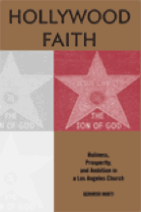
Happy to see my new book Hollywood Faith: Holiness, Prosperity, and Ambition in a Los Angeles Church published last October. Reviews are just starting to come in - so far, so good! Thanks to colleagues using the book in their class (see Dr. Walt Bower's review at Barnes and Noble.com). Students seem to relate to the "Hollywood angle" while sneaking in some sophisticated sociological theorizing. Relevance structures and teaching - that's how we roll...

Although it was back to Davidson for Spring, it really was more of a launch point for a schedule full of speaking, traveling, and consulting in a mix of academic and congregational contexts. Thanks to Bill McKinney, I've enjoyed getting to know the community at the Pacific School of Religion. These are my California kin-folk who are so willing to embrace a wide-ranging dialogue on the future of American religion. Scott Thumma and Warren Bird provided an opportunity for me to join a team of scholars studying the "megachurch phenomenon" using extensive data they've collected. Our time at the Innovation Gathering in Dallas (notes & audio here) was productive and fun. More coming from that project, including presentations in Denver and a possible edited book.

Color: Fiber FestivalImage by >>>WonderMike<<< via Flickr


Thanks also to Bayside Church in Granite Bay, a huge center for new-style evangelicalism in Sacramento, and to the American Baptist Church General Executive Council, for each hosting a set of conversations focused on an overlap between their questions and my own research concerns.

In addition to continuing projects, I am excited about a new ethnographic project started this past year on political identity. I found a fascinating congregation in Charlotte, NC, that strives to negotiate the conservative-liberal political dimension in a way that reveals significant trends happening in Obama-Age American Christianity. Special thanks to leaders and members who have been interviewed so far -- their rich experiences contribute to all of us understanding the new changes occurring at the intersection of politics and religion in the US.

In the midst of all that, my first book is coming back to get some fresh attention. With a new preface, a second edition of my book A Mosaic of Believers: Diversity and Innovation in a Multiethnic Church will arrive sometime in early Fall. Nice to see a slim, affordable edition available for students, church leaders, and anyone interested in where religion may be headed.

There's no way to represent all the happenings this year. So many new friends, so many exciting projects, so many relationships that continue to deepen. I'm looking forward to another exciting year!

Wednesday, April 15, 2009

Blog Interview with Gerardo Marti on Hollywood Faith

Quick post: I recently completed a radio-type interview on my recent book now available online.


I got an email a few weeks ago from my friend Alex McManus, creator of Voxtropolis and founder of the International Mentoring Network, along with Sam Radford, leader of Mosaic Sheffield, England, and consultant with Awaken Consultancy about their new venture. As you can see, these guys are busy!

Cover of Cover via Amazon


Alex and Sam were kind enough to invite me for an interview on their "blogtalk" radio program IMN Central about my new book Hollywood Faith. The program, All Things M, features about 30 minutes of conversation between Alex, Sam, and myself, and is now available online.

Alex is author of a brand new book, Making the World Human Again: The Quest to Save the Future from Religion. Sam has his own blog also.

One more thing -- Sam is organizing events for the IMN and Mosaic Alliance through Mosaic Sheffield. In particular, look for The Human Event happening in October of this year. The website gives more information on what will be a provocative, intimate, and international gathering of entrepreneurial-minded church leaders.

Thursday, March 19, 2009

A Mosaic of Believers - Big Sale, Free Shipping

As part of an "Intellectual Stimulus Package Sale," A Mosaic of Believers is currently on sale, and free shipping is available.

"Engagingly and accessibly written, this excellent book deserves wide readership among everyone interested in US religion, ethnicity, organizations and urban culture." —Choice


Indiana University Press is hosting free ground shipping in the U.S. with code WWEZXX at checkout.

Mosaic in southern California is one of the largest and most innovative multiethnic congregations in America. Gerardo Marti shows us how this unusual church has achieved multiethnicity, not by targeting ethnic groups, but by providing multiple havens of inclusion that play down ethnic differences. He reveals a congregation aiming to reconstruct evangelical theology, personal identity, member involvement, and church governance to create an institution with greater relevance to the social reality of a new generation.

Monday, March 2, 2009

Señor Herberg and the Complexity of American Latino Religious Identity

Will Herberg framed much of our approach to understanding immigrant religion across the generations. But does his framework apply to the experience of American Latinos?


I was asked to contribute to a proposed book of essays on second-generation immigration -- specifically on Latinos, and specifically on their racial and religious identity. I submitted my draft this week. Looking back at the process, I found that in putting my thoughts together I was quickly overwhelmed with the complexity of the subject.

What to say in 25 pages??

Immigrants arriving at Ellis Island, 1902Immigrants at Ellis Island. Image via Wikipedia

Well, my quick review of the research on immigrant religion suggests to me a general assumption. From Will Herberg's analysis of immigrant religion until now, scholars of immigrant religion in America generally assume that congregations are ethnically-based social structures that seal themselves off from the inter-ethnic, cross-racial interactions.

Everywhere else in daily life we expect to encounter cross-ethnic diversity like going to school, shopping at the mall, or working at a job for pay. But churches are “ethnic islands” that protect and preserve ethnically based religious cultures, even if younger generations accentuate more of their lives and identities outside of their religious commitments in comparison with their parents and grandparents.

This presents an overarching "mono-ethnic" assumption of church life. And the assumption leads us to a set of “either-or” categories. Younger generations either continue their ethnically-specific religious commitments in particular ways (often with modifications) or they abandon these religious commitments in favor of more general, more assimilated (meaning more “white”) ways of living in society—with our without a religious adherence.

As an ethnographer, I try to pay close attention to the actual context of people's lives. I want to be around ordinary people doing ordinary things to understand their ordinary actions and attitudes. And then I try to understand how their "ordinary" lives fit into "extraordinary" circumstances that allow thier lives to happen. This is part of what's been called a “lived religion” approach. It's an approach that pays close attention to history and context and provides opportunity to see the variety of ways race, ethnicity, and identity co-mingle.

Latino album coverImage via Wikipedia

Because of this approach, I find it difficult to say "Latino religion" or "Latino congregation" because it homogenizes the variety of Latino religions and Latino congregations that exist in the world. For example, for this chapter I returned to Mosaic, a multiethnic church in Los Angeles, to describe a congregation of Latinos who practice their religion alongside members of other ethno-racial groups. The Latinos at Mosaic regularly live out their religious commitments in constant interaction with church members who have non-Latino backgrounds including Asian, Caucasian, African-American, and other ancestral heritages.

The second-generation Latinos in this integrated congregation identify themselves as “Hispanic” yet understand come to understand their religious identities in non-ethnic ways.

Add to this the general dynamic faced by immigrants in American society. Immigrants often struggle to define their particular cultural identity in an increasingly diverse society that tries to lump them in often “unwanted and crude” categories—even among social scientists.

The Hispanic world.The Hispanic World. Image via Wikipedia

Despite the racialized climate of the United States that often force people into categories, the second generation may not seek to affirm their ethnic identity through forming “pan-Latino” designations as much as remain subject to them. While other pan-Latino groups claim individuals as their own for social or political reasons, other groups may simply label these second generations as “Hispanic” because of their ancestral heritage—even when language and other behavior move decisively away from their parent’s culture.

In day-to-day life, many Latinos simply learn to “code switch” between being “Hispanic” at home and being “non-Hispanic” and church, school, or work.

I think we all need to pay more attention to the complexity and paradox so often found within specific ethno-racial communities. By incorporating ethnographic studies of Latino congregations and adding the experience of Latino members from Mosaic in Los Angeles, I want this chapter to underscore the nuances available to those willing to grasp the diverse ways in which religion intertwines with race and ethnicity. The highly contextual nature of ethnic-designations, racial relations, and the process of forming religious identities encourages us all to attend more closely to the multiple identities that inevitably impinge on American Latinos and, in turn, to the variable reconstructions of racial, ethnic, and religious categories among all American ethnic groups across the generations.

Saturday, February 28, 2009

Resources on Successful Multiracial-Multiethnic Churches

Quick post - Online resource on ethnic and racial diversity in churches.


The Calvin Institute of Christian Worship still has a series of pages my research on racial and ethnic diversity in churches.

You'll find several links and lists of resources.

You can find it all here.

Monday, February 23, 2009

Evangelicals and the Creative Class

A short article from The Baptist Standard raises the tension between Creative Class lifestyles and the future of the local church.


I became fascinated with the Creative Class since finding Richard Florida's book on a Borders Bookstore shelf in 2002. I quickly read it, incorporated some of the ideas into my first book on Mosaic, and expanded the ideas in my next book and a forthcoming journal article that will eventually be available in the journal Sociology of Religion. I think the emerging Creative Class is important for the future of American religion.

The Rise of the Creative ClassImage by marklarson via Flickr


In any case, it seems like it always takes a while for ideas to get filtered more broadly. And the notion of the Creative Class is just beginning to get more attention among church leaders.

The Creative Class represents a different kind of economics and lifestyle. Episodic work, more creatively-intellectually intensive efforts, greater openness to diversity and multiculturalism are only some of the characteristics Florida suggests are central to this new social group. Cities have followed Florida's advice for revitalizing their urban environments in order to attract more of these "creative types" since Florida forcefully argues (and many city leaders agree) that economically thriving cities actively attract and engage the Creative Class.

Hollywood, a well-known district of Los Angele...Image via Wikipedia


Now that cities are paying attention, churches are trying to shift as well. This little article from The Baptist Standard gives a glimpse at how conservative churches are altering their ministries to accommodate what they see as a surge of the local population (gentrification, anyone?) and still want to be "church" for them. From blighted to revitalized, these churches want to be part of the upswing in local happenings.

And when you consider how many congregations had initially been built in city-centres (and then promptly lost their memberships as automobiles and suburbs moved church-going populations outward), they really want to find ways to redefine their ministries to reach these new urbanites.

churchImage by 1546 via Flickr

Are these the first efforts to reach the emerging Creative Class? Nope. I continue to see Mosaic in Los Angeles and Oasis in Hollywood as archetypes for ministry that reaches this group. But the spread of the Creative Class to even moderately sized cities across the U.S. who are regional "creative capitals" will certainly foster more renovations in church ministries.

What may have seemed like "crazy ministry philosophies" for people in L.A. doesn't seem so crazy now.


Saturday, February 21, 2009

Audio: Diversity and Innovation in a Multiethnic Church


Still available online, here is a guest lecture at Calvin College (co-sponsored by the Department of Sociology and the Calvin Institute for Christian Worship) where I focus on insights from my first book.

The institute posted the lecture titled "Diversity and Innovation in a Multi-Ethnic Church."

Friday, February 13, 2009

Mosaic of Believers - 2nd Edition Paperback Fall 2009


I just found out from Indiana University Press that my first book A Mosaic of Believers will be published in paperback with an updated preface in Fall 2009.

Good news for readers all around the world (I can hear them cheering now).

Monday, February 2, 2009

How Racial and Ethnic Groups Join Together in Churches

I just received the proof sheets for a new article I have coming out in March. The article suggests a process of how members of different racial and ethnic groups come together in diverse congregations. It will be available in March in the Journal for the Scientific Study of Religion.


New Article on Racial Diversity in Churches

How do different races/ethnicities come together in diverse churches? That's a big question, and we haven't settled it yet. But it's an important--and persistent--question. Toward answering this, I wrote an article being published next month based on over 100 interviews and over 24 months of observation in two racially diverse churches:


Affinity, Identity, and Transcendence:
The Experience of Religious Racial Integration in Diverse Congregations

by Gerardo Marti

Journal for the Scientific Study of Religion, Vol. 48:1 (March) 54-69.


Rather than focus on survey data or broad-level statistics in this article, I focus on actual member experiences. It's a process I call “religious racial integration.” I wanted to look at the process by which members of different ancestral heritages come to consider their diverse congregation to be their congregation, considers themselves as belonging to the congregation, have committed themselves to the congregation, and see themselves as an extension of the congregation. In the article I treat “race” and “ethnicity” as analytical concepts that reflect negotiated, subjective identities rather than mere demographic labels.

Here's a quick overview:

How do members of disparate ethnic and racial heritages come to identify and achieve stable affiliation with multiracial congregations? This article specifies an approach to understanding member experiences of corporate belonging in diverse congregations using ethnic identity theory. Synthesizing ethnographic data drawn from two extensive case studies, the article provides a heuristic model for understanding the process by which members of disparate ethnic and racial heritages come to identify and achieve stable affiliation with multiethnic/ multiracial congregations. Three “moments” (affinity with the congregation, identity reorientation, and ethnic transcendence) represent key phases in the lived religious experience of members as they co-construct common bonds of spiritual kinship. Cautions and suggestions are provided for future research.

The Process of Religious Racial Integration

Cover of Cover via AmazonThe study of multiethnic/multiracial congregations is quite new, growing in the last decade, and particularly with the publication of Michael Emerson and Christian Smith’s book, Divided by Faith: Evangelical Religion and the Problem of Race in America.

A notable spurt of scholarship has already occurred (including my own books, A Mosaic of Believers and Hollywood Faith, other books by Kathleen Garces-Foley and Korie Edwards as well as several articles in a recent issue of JSSR).

Even with all this research (and more books and articles on multiethnic/multiracial churches not listed here), an understudied dynamic within diverse congregations is the formation and negotiation of subjective identities among members who join them. My analysis suggests a process of religious racial integration within multiracial congregations.

Without positing a strict linear sequence in the construction of a new corporate identity, I propose three “moments” that characterize key phases in the lived experience of members.

Moment I: Affinity with the Congregation

The process of membership in a multiracial congregation from a sociological standpoint is a process that begins with individuals establishing some base of affinity. Affinity exists between individuals when they share interests that draw them together and provide an initial orientation for further interactions. The article provides more detail on this.

Moment II: Identity Reorientation

The second moment in the process of integrating individuals from diverse races into a single congregation is identity reorientation. This is when a person moves away from defining themselves on the basis of interests, values, and preferences found outside of the congregation but rather defining themselves more within a shared identity within the congregation.

Moment III: Ethnic Transcendence

The third and last moment of integrating people of diverse ethnic and racial heritages into a single religious organization culminates when a person’s shared religious identity overrides potentially divisive aspects of ethnic affiliation in considerations of social interaction.


I first wrote about "ethnic transcendence" in chapter 7 of A Mosaic of Believers. Ethnic transcendence is not to be confused with a type of “color-blind” approach to diversity that intentionally seeks to ignore or erase ethnic differences. The occurrence of ethnic transcendence allows significant racial and ethnic issues (like structural racism and institutionalized discrimination) to be discussed or even accentuated in the public ministries of the congregation.

In short, the distinctive work of multiracial congregations lies in shaping people toward a new identity framed around new interests.

Of course, there's a whole lot more background, analysis, information, and points to consider in the article itself when it arrives in March.

Sunday, February 1, 2009

Embedding Innovation at the Core of Your Organization Part 3


In my previous posts Part 1 and Part 2, I've been writing about innovation as a core organizational competency and about creating an "innovation pipeline." Today in the final part of the series, I want to focus on what I discovered through my research in one congregation -- Mosaic in Los Angeles. Here is part 3 of 3 on innovation and congregation.


Creating a Change-Friendly Church Culture

There's a great discussion about the relationship between innovation and tradition among contemporary church leaders. Could change-orientation be a legitimate aspect to congregations?


In my research, I've found that for many evangelicals innovation is not an inconvenient "extra" to ministry but actively developed a core competency in their churches. I will write more about that in my final post in this three-part series.


Negotiating a Theology of Change

The pastor of Mosiac, Erwin McManus, wrote in his first book that the spiritual life of human beings is about change. He writes,

The whole theological concept of sanctification is rooted in the reality that God changes people. Repentance is change, conversion is change, regeneration is change, transformation is change, and sanctification is change. All of the deeply theological constructs that we have embraced and understand to be true cannot exist outside of a theology of change.
And again,
If you don’t like change, you’d better not become a Christian. Once you belong to Jesus, change is inevitable. Our whole Christian experience is an experience of change.
The life of a dedicated follower of Jesus is full of change, and the best changes are the ones that followers initiate in pursuit of God’s mission.

The theme of personal change in pursuit of divine potential is so important to Erwin that it is the subject of Uprising: A Revolution of the Soul (2003) and Chasing Daylight.


The Praxis of Mission

To understand the theological framework of the church one must first grasp that the root theological impulse at Mosaic is missiology. In our conversations, Pastor Erwin said very simply: “Mission shapes theology.”

For Erwin, maturity is found in missionary praxis. His theology paints a picture of a creative, catalytic God who calls out creative, catalytic leaders to nurture creative, catalytic teams in pursuit of global evangelization. His theology seeks to affirm the unique, creative contributions of individuals while also catalyzing leaders who will cultivate intentional communities that purposefully engage culture for the sake of mission.

The church cultivates an expanding membership committed to do whatever is necessary to serve people outside of the church and be relevant to the dominant culture.


Culture of Creativity and Change

Active experimentation became a pervasive aspect of Mosaic with the coming of Pastor Erwin.

Active experimentation keeps the organization pliable toward doing whatever is needed to fulfill the mission of the church in ever changing circumstances. The ability to keep the organization pliable is dependent on the ability to keep members pliable.

For Kevin, pliability means “that you’re willing to change, that you’re willing to take on radical new things and move in completely different directions just in order to follow Jesus.” The phrase “in order to follow Jesus” is important. People introduce change personally and corporately out of a sense of God’s initiation in pursuit of a particular direction.

One area of constant experimentation is in the arts. New arenas for dance, the visual graphics, and music provide opportunities to deeply connect as they pursue creative projects in support of church goals. Samantha explained her commitment to Mosaic, saying, “There were so many artists at Mosaic that were Christians, and I never knew that before.” Mandy, active in the film industry, talked about when she first came to Mosaic:
I saw there were a lot of different people working in the industry that were part of Mosaic. I saw that there was a lead pastor, Pastor Erwin, that basically was saying creativity is the natural form of spirituality. He was encouraging the artists.
People frequently mention a sense of empowerment and camaraderie through corporate activity in the congregation.

Not only are creative, “edgy” endeavors in media and creative arts embraced, but also the atmosphere of working together toward change that would impact history. Mike told me, “I feel I’m joining hands with everyone to impact culture, to impact the world. It’s big.” Kevin admits, “Part of me just gets so excited to think that a small group of people who are determined can actually change the world.”


Introducing the Catalytic Leader

In change-oriented systems like Mosaic, innovators are not only welcome but given influence. According to Mandy, “Mosaic says, ‘Yes, be creative.’ I’ve never been to a church that said, ‘Be creative; think of ideas....’ It’s crazy.” A new person at Mosaic who had just started a film production company said to me, “We’re all dreamers around here.” Another respondent added, “Hey, we want to change things. We want to make things radical. We want to make things different.”


Catalysts are the most action-oriented leadership role at Mosaic, expressing urgency for evangelistic outreach. They solve problems and seek opportunities for outreach with a practical result that the church grows. Catalysts are those most explicitly affirmed, given influence, and held out as models for others.

Two core questions draw out catalytic leaders: 1) “What is your passion?”, and 2) “Will you fix it?” Asking people what their passions are, Mosaic seeks to draw out enthusiastic leaders who sacrificially give themselves to pursuing their dreams and, simultaneously, accomplish the mission of the church. Overall, initiative and resourcefulness in pursuit of a passion is rewarded at Mosaic.

Mosaic also prompts catalytic leadership by asking, “Will you fix it?” At Mosaic, every imperfection is an invitation for participation. When someone suggests something, they are invited to take responsibility and make it happen. “Maybe God is calling you to do that,” is the comment. So, Mosaic members have a sense that problems are not the fault of leadership but rather the failure of people in the congregation to “step up” to the need.


Hope You Enjoyed this Series

This series, Embedding Innovation at the Core of Your Organization, is only intended to get us thinking about possible ways in which innovation and congregation can be connected.

I'm interested in hearing about innovations found in congregations out there.

This final post should be read with the previous ones, titled Embedding Innovation at the Core of Your Organization Part 1 and Embedding Innovation at the Core of Your Organization Part 2.


Sunday, January 25, 2009

I'm on PBS - Interview on Striving Towards Multiethnic Church

This was fun. While visiting Grand Rapids, Michigan, I was invited to talk about my research on racial and ethnic diversity in churches as part of season nine of the show Inner Compass.

This is a regular program broadcast over PBS in western Michigan and beyond and also available online.

For the full video through vimeo.com, click here.

Tuesday, January 20, 2009

Blog Interview with Me from "Across the Pond"


One of the leaders in the Mosaic Alliance*, my very kind friend Sam Radford from Sheffield in the UK posted an "author interview" of my research awhile back.

You can read the interview online and take a moment to check out Sam's blog.

. . . . . . . . . . . . . . . . . . . . . . . . . . . . . . . . . . . . . . .

*I'll write more about the Mosaic Alliance, a network of churches and congregational leaders initiated at Mosaic in Los Angeles, in a later post.

Thursday, January 15, 2009

Too Many "Celebration" Churches? Competition for Contemporary Names Growing

The experience of one church in Florida indicates competition for good church names may be ratcheting up. Contemporary church names are in demand -- so much so that smaller churches are having to give up their "cool" names as larger churches take them over.


Too Many "Celebrations"

I read an interesting article on the trouble with generic, contemporary church names in the Florida-Times Union paper. It starts,

Running a successful church requires cutting-edge marketing and branding as much as it does innovative preaching and ministry.

We've seen this trend of branding through church names. In an effort to break away from stereotypes, local churches dump stodgy labels from their names and take on new, "contemporary" ones. What's surprising from the experience of the church in this article is this:

We may have come to a point where there are too many churches with the same "contemporary" name. From the article:

The Fellowship at Celebration Baptist Church has learned that the hard way during the past decade as a similarly named congregation has become synonymous with the word "Celebration." As a result, the East Arlington congregation is changing its name on Thursday to FaithBridge Church.

...Necessary because another congregation in town - Celebration Church pastored by Stovall Weems - has grown so big, so fast in the past decade that it simply owns that name.
So, here we have one contemporary church "trumped" by another more successful contemporary church with the same name. The experience of this church made me think about the whole issue of contemporary church naming.

"Name-Changed" Congregations

There are many churches today that appear to be new but may actually be "old" churches in disguise. They successfully reinvented themselves with a new name. I'm calling these "Name-Changed Congregations."

Many of you know I wrote about another "name-changed" congregation, Mosaic in Los Angeles. It was founded in the 1930s as The First Southern Baptist Church of East Los Angeles and became The Church on Brady in the 1970s.

The Church on Brady, which became Mosaic in 1998, may be the first church to drop the "Southern Baptist" moniker. Motivated to help people know where the church was located (on Brady Street) and to avoid backlash against stereotypes (Latino Catholics in the area avoided Baptist churches), the new church name helped to steadily grow the congregation from 90 to over 500 members.

Dropping denominational names was considered quite innovative. It successfully re-established The Church on Brady as a new entity, with bold leadership and a fresh vision.

Baptists "Ultra-Preachy and Judgmental"

The lack of denominational labels is not as surprising today. Many church leaders believe certain labels are liabilities to their mission. For example, FaithBridge Church is dropping "Baptist from the name,
"Baptist" is being dropped - the word only - because denomination names are a turn-off to the mostly younger, largely unchurched singles and families.
And another church I wrote about, Oasis Christian Center, decided to avoid the word "Church" in their name altogether.


The One Word Church Name

Back in Los Angeles, I believe changing the name from The Church on Brady to Mosaic pushed the trend of contemporary church names.

Although I can't absolutely prove it, I believe Mosaic in Los Angeles may be the first church to adopt a "One Word Church Name" without the word "Church" in the title. The lead pastor continues to be adamant. The name of the church is Mosaic, not Mosaic Church. Other "One Word Churches" include Flood, Impact, Epic, Lift, and Elevation.

Circulating Church Names? Or Inventing New Ones?

We may be coming to a new round of innovations in church naming.

Will denominations re-claim their church signs? Perhaps. But I instead see churches reconsidering church naming. "Community," "Celebration" or "Fellowship" may mark churches as "soooo 1990's."

This reminds me a bit of internet domain names and free email addresses. As the obvious names were taken up, new ones were invented.

What do you think?