Showing posts with label culture. Show all posts

Monday, December 9, 2013

‘The Last Stop: Understanding the Emerging Church Movement’ Interview with Gladys Ganiel and Gerardo Marti Published in Bearings

‘The Last Stop: Understanding the Emerging Church Movement’ Interview with Gladys Ganiel and Gerardo Marti Published in Bearings

Bearings5CoverAn interview with Gerardo Marti and me, ‘The Last Stop: Understanding the Emerging Church Movement,’ has been published in the Collegeville Institute’s Bearings magazine.

The interview begins on page nine and is based in large part on our forthcoming book, The Deconstructed Church: Understanding Emerging Christianity, and includes questions such as:
  • How do you introduce the Emerging Church to those who are unfamiliar with the movement?
  • What does the Emerging Church Movement tell us about the contemporary religious landscape? What is its significance as a modern religious movement?
  • Do you think the Emerging Church Movement will play a role in Christianity’s historical development?

Monday, August 23, 2010

Superman, Batman, and... Mumita! - Islam Conqures Comic Book Genre

A quick post: I've been noticing interesting mixtures of religion and popculture lately, mostly because I think people are wrong to believe that the appeal of popular culture exists only among certain brands of Christian Protestantism seen to be crassly consumerist and dumbed-down accomodationist. But the effort to remain lively and relevant are found among all religious orientations.

Enter the 99!

Created by Dr. Naif Al-Mutawa, the 99 is a comic book series in the style of Justice League or X-Men that unites a band of superpowered youth to bring peace into society under the leadership of the brilliant Dr. Ramzi.

The backstory returns to the Middle East, the attempt to preserve a library of knowledge being destroyed by war, and a mystical-chemical process of inscribing knowledge into 99 gemstones. Fast-forward to our modern day, and our heroes discover their powers and their brilliant mentor form a team to save the world.

The "origins issue" can be downloaded online.

The writers freely draw on allusions of other successful comic book series. After all, they want to be successful and believe they can learn from the models of the greatest characters created in the past century.

But perhaps the most interesting is the upfront attempt to introduce comic book heroes that reflect the virtues of Islam and are consistent with beliefs of Muslims worldwide. This makes the development of this graphic art series ripe for sociological study: how do the comic book creators fashion an Islamic-friendly graphic that can appeal to the various, globally-diffused orientations within Islam?

I've not read much of the series, so I have yet to see blatant reference to prayers or readings from sacred texts. At most, someone online has already joked about Wonder Woman being "fully clothed" in an forthcoming six-issue team-up with DC comics JLA in October. Besides this, it is hard to tell just how "religious" this series will be.

But I do know this: What is special about the number 99? Why are there 99 gemstones and 99 heroes? Because the characters are intended to display the 99 attributes of Allah.

Just like the Hollywood Christians I write about in my book Hollywood Faith, the series is intended to support and accentuate religious values. Yet it is intended to do so in a way that is unobtrusive to telling a good story. When you read the last page of the "origins issue," the creator is clear that the comic is intended for a Muslim audience, fashioned in what he calls an "East-Meets-West" fashion that combines the fierce independence of heroes of the West (Superman, Batman, Spiderman) and the team-work comeraderie of the East (a la Pokeman).

More on the use of popculture in the Arab world is found in a talk given by Shereen El Feki.

Overall, the intent is to correct the view of Islam as an intolerant religion through a humble framework, accessible to children. There is even a 99 theme park in Kuwait prominently displaying the heroes as awe inspiring icons. According to this news story, this is the Middle East's first theme park.

And while success is hard to measure, the comic is already translated in various languages, is conveniently available online for digital download, has already been put into a computer animated format, is teaming with other important comic book publishers, receiving good media attention, and the creator is committed to making this bold venture a striking presence on the global stage.

Watch a TED talk from the creator and more on the comic book series.

Tuesday, July 27, 2010

Silly Bandz - Stretching the Relevance of Spirituality

Thanks to an ongoing invitation from Jason Byasee at the Duke Divinity Call & Response Blog, I just posted a fun article on a recent experience visiting a church here in North Carolina. As my friend John Schmalzbauer commented on my facebook page, "Another interesting episode in the story of Christianity and material culture!"


Anyone who is a parent or works around kids has seen children go crazy over Silly Bandz, a broad array of colorful rubber bands shaped like cars, animals, and superheroes, and worn in big bunches on forearms. I was introduced to these back in April when my kids begged me to drive them over to the local drug store in search of a new shipment. It's not just the little ones who are into it. From toddlers to teens, the kids collect and trade Silly Bandz to express their identity and proudly flash a new form of status in the latest hierarchy of "cool."

So, when I visited a church recently I recognized the rubbery trinkets being passed out by greeters at the door. Actually, my kids saw them before I did - "Dad! Dad! They're giving out Silly Bandz!" Smiling volunteers enthusiastically gave away armloads of these pretty toys to excited kids as they came into the service that day.

As you might guess, the ambiance of this church is casual, the worship music is loud, and the "preaching" conversational. The pastor proudly showed off his own Silly Bandz at the beginning of the service before moving on.

But it was after the service when I saw these trinkets work their magic as kids, parents, other church members, and church staff were animatedly talking about their Silly Bandz, trading amongst each other, and telling stories connecting the shape of these bands to the shape of their lives. Strangers made friends, and adults found constructive ways to talk with children. A band shaped like an electric guitar prompted a person to talk about their love of music. Another shaped as an outline of the continental United States got people talking about their summer travels. And ones shaped like a cross were proudly traded around tables in the foyer amidst conversation about Jesus.
...

You can jump to the rest of the article here & comment at the Duke Divinity Blog hosted by Leadership Education at Duke University.

Saturday, December 5, 2009

Smartphone Religion at the Duke Divinity Call & Response Blog

Christmas season is in full gear at the Marti house -- finishing up my classes, the kids homework projects before the end of the year, community activities here in Davidson.

In the midst of it all, I've been able to take Jason Byasee's invitation to again contribute last week to the Faith & Leadership Blog at Duke Divinity.


My latest post on The Wi-Fi Church of the Future (and the Present)
is tagged under Innovation | Liturgy | Technology ):

Worldwide iPhone sales by quarter in an svg fo...Image via Wikipedia

"The past two years have seen a rapid acceleration in the adoption of portable computing by the average person. This will inevitably prompt changes by church leaders."
It's prompted a good online exchange.

I'll encourage you to read the whole post on your own. But more than the post itself are the responses that follow it.

The Executive Director of Leadership Education at Duke Divinity first describes his "knee jerk" reaction against churches leaning on such technology. Another believes "the app" already exists. And yet another comment brings concern for the poor and their access to wi-fi technology and information.

I appreciate the dialogue. I'm learning all the time, and the comments are helpful.

Overall what this exchange suggests to me is that we've arrived at an interesting moment in the relationship between technology and church.

Assorted smartphones. From left to right, top ...Image via Wikipedia

The American culture has swallowed the use of smartphones almost whole -- after all, analysts can readily predict how many iPhones will be found under the Christmas tree this year.

But church leaders remain nervous about learning new techniques to harness the use of these advanced devices to their ministries.

Smartphones are not the future; they are already here.

So the failure lies not in ministry budgets (people have their own phones), it lies in the imagination of leaders to use these devices to advance their ministry.

Tuesday, October 20, 2009

New Approaches to New Evangelicalism - Special Session in Denver

Here's a shout out for a session I organized for this weekend at SSSR in Denver, Colorado, on contemporary Evangelicalism in the US and abroad.

Jesus SavesImage by Andwar via Flickr


Competition among sessions this year at SSSR is fierce!

So many great sessions in each slot, but you just can't miss the session on New Approaches to New Evangelicalism. Our session brims with brilliance through the work of excellent scholars doing fascinating research. You can count on this being a stimulating time with plenty to chew on.

New Approaches to New Evangelicalism
Westin Tabor Center
Room: Teller

Organizer: Gerardo Marti, Davidson College
One Way Out: Examining the ‘Evangelical Exit Clause’ for Central America
Robert Brenneman, University of Notre Dame (rbrennem@nd.edu)

Exporters of Religion: Evangelicals in Global South Impact Other Countries with the Gospel
Stephen Offutt, Boston University (soffutt@bu.edu)

Reconstructing Social Space at Willow Creek Community Church
Peter Mundey, University of Notre Dame (pmundey@nd.edu)

The Emotional and Aesthetic Dimensions of the Local Church Rock Scene
Kevin McElmurry, University of Missouri (Klm143@mizzou.edu)

Plan on meeting us Saturday October 24 @ 3:45pm-5:15pm.

Tuesday, September 8, 2009

Instant Cool: Explaining the Diffusion of "Contemporary" Church Culture

Church Marketing Sucks, a website concerned with the use of contemporary marketing techniques by church leaders, recently provided a list of great media resources for churches freely available online. Through sites like these, we have a privileged window into American religion. Why? Because understanding the circulation of these media materials gives us an alternative means for understanding the widespread diffusion of "contemporary" church culture.

The Fields Church - Newspaper AdImage by mufan96 via Flickr

We know contemporary churches use rented facilities. Not just movie theaters and high school auditoriums--churches are using bars and coffeehouses, community centers and warehouses, even lake shores and parking lots. How do these church leaders focus spiritual attention in these architecturally challenging sites?

Well, what's happening is that even churches who do not have specially-designed or "megachurch" aesthetics are adopting sharp media imagery to promote an exciting "vibe" that directs devotional attention and speaks to quality (and money) even when the church is just starting out.

Take a look through the free resource sites listed by Church Marketing Sucks below. Each of these congregational ministries have longtime experience producing entire suites of visual materials that compliment and accentuate message series:Clicking and exploring these sites, you get a sense of what non-high liturgy, "contemporary" churches are bringing into their services.

(For church-researcher types, these materials provide fodder for understanding seeker churches, new paradigm churches, and emerging adult spirituality.)

But, I'm writing this post to make a particular point: The availability of these materials points out an aspect of the modern diffusion of church culture. Here's what I see.

The internet is allowing more easy accessibility to media resources. Churches which have produced these materials (and are frequently asked by scores of other church leaders who literally salivate over obtaining such things) are seeing the extension of their local church ministry as giving away these resources--at zero cost.

See, churches that produce these materials are well aware of the money and time invested in the creation of media materials that have an inherent disposability to them. They'll never be used again in their church (since churches don't "repeat" sermon series). So they are happy to have them used by others and see their investment put to good use by others.

In other words, providing media resources to other churches (after they have been used in the base church) is understood to be part of the missional outreach of the congregation.Graphic materials are viewed as tools (modern, necessary, missionary tools) that can be easily adapted by like-minded ministries who are perceived to be essentially partnering with them to spread a message they already believe should be widely promoted.

Because these media items are used in many different churches across the nation (perhaps the anglophone world), and because church attenders are highly unlikely to know the materials they see were originally used somewhere else, there is an unacknowledged yet powerful diffusion of Christian visual culture -- at last a type of Christian culture.

And because we have not studied this, I speculate that the diffusion of style, ambiance, and ethos of religion embedded within these media materials is reinforcing particular boundaries of similarity and identity.

In the research literature, this is a type of "institutional isomorphism." But I won't go into all that now. It's enough to say that researchers DiMaggio and Powell* defined imitating or "Mimetic Processes" as coming from similar external conditions. In particular:

Uncertainty encourages imitation.

What does this mean for how "contemporary" church culture is widely reproduced?

Let's look at how this works. Using DiMaggio and Powell's framework, predictors of similarity (or "isomorphism") are based on premises like this:

Principle 1: The greater the centralization of resource supply, the more it will change to resemble the organizations it is dependent upon.

Application
1: There are only a few churches willing to give away these media materials, so the dependency on these few churches raises their influence as models for how to "do church."

Principle 2: The more uncertainty, the more an organization will model it's structure after successful firms.

Application
2: The means to growing new (and struggling) churches is highly uncertain, so leaders look to the successes of other, usually much larger and media-rich, churches.

Principle 3: The more ambiguous the goals, the more an organization will mimic a successful one to establish legitimacy.

Application
3:
A mission statement like "Reaching our community with the gospel" is quite ambiguous, so church leaders quickly become alerted to widely accepted models of ministry and absorb their media practices.
These are not exhaustive, and certainly the principles are not directed soley toward understanding the use of media. Nevertheless, these principles provide a quick peek into the dynamics of isomorphism that can be applied.

Other important aspects are how organizational models can be diffused is through employee migration, which in the case of churches would include the movement of clergy, lay leaders, as well as members between churches. Larger churches with well-institutionalized media ministries more quickly diffuse their media-intelligent people in comparison with smaller churches which are not likely to have as extensive of media practices.

Also, organizational models are spread by consulting firms, which in the case of leaders is usually accomplished through church leader conferences. Highlighting and discussing the use of media is a common aspect of "contemporary" church conferences.

I've come a long way in this post, something I thought I'd shoot off much more quickly than I did. Here's my main point.

In short, I've come to think that the accessibility and wide-spread use of church media materials gives us an alternative pathway to grasping how the cultures of "contemporary" churches can be understood. For me, this highlights that the occurrence of "contemporary" churches are not isolated phenomena--and most of us know this.

Further, it also suggests that "contemporary" churches are more tightly networked with each other than we usually think, specifically around assisting one another to reach similar goals with similar methods. Media materials provides a tangible means to enact those networks.

*P. J. DiMaggio & W. Powell, "The iron cage revisited" institutional isomorphism and collective rationality in organizational fields", American Sociological Review, 48 (1983), 147-60.

Sunday, May 3, 2009

Congregations Prepare for Flu Anxiety

Quick post: Washington Post's section "On Faith" describes liturgical changes amidst the Swine Flu threat.

From Congregations Prepare for Flu Anxiety This Weekend by Jacqueline L. Salmon

Plein Air CommunionImage by SnoShuu via Flickr

In the Washington area, the Arlington diocese recommends Communion wine not be served in a common cup.

[In] Austin, Texas, where more than two dozen cases infections have been confirmed, [the Bishiop] has asked priests not to offer Communion wine at Mass.

University United Methodist Church in San Antonio has ordered individually wrapped Communion elements for this Sunday.

Churches should consider suspending the "sign of peace"--a customary handshake exchanged during the Mass, substituting a bow or other gesture instead.

The archdiocese of Washington D.C. recommends that churches have hand sanitizer available for lay ministers who distribute communion wafers and wine.

Also - an interesting story from a local ABC news station shows how a Roman Catholic Church in Fresno, California, is changing their practices as a precaution.

Thursday, February 5, 2009

Johnny Cash as Icon of American Paradox

New book on Johnny Cash that plays on the ironic contradictions of this American icon.

Here's a great new book,

Johnny Cash and the Paradox of American Identity

From the publisher:

Throughout his career, Johnny Cash has been depicted - and has depicted himself - as a walking contradiction: social protestor and establishment patriot, drugged wildman and devout Christian crusader, rebel outlaw hillbilly thug and elder statesman. Leigh H. Edwards explores the allure of this paradoxical image and its cultural significance.

She argues that Cash embodies irresolvable contradictions of American identity that reflect foundational issues in the American experience, such as the tensions between freedom and patriotism, individual rights and nationalism, the sacred and the profane.

She illustrates how this model of ambivalence is a vital paradigm for American popular music, and for American identity in general.

This book looks great, partly because Johnny Cash is inherently interesting and partly because this gives us an occasion to look at the messiness of what we often find to be "cool" in American culture.

And definitions of "cool" really matter in American religion.

To the extent that preachers, advocates, and evangelists face the pressure to gain the attention of people in culture, they find ways to co-opt that which is already seen as attractive in the culture. This in turn influences what is absorbed as images and icons used in sermons, announcements, and plays on media.

So, we can usually spot what seems "cool" in culture and even predict that it will be re-framed in religious contexts. What we don't often do is see how that "cool" is constructed.

Cover of "The Elementary Forms of Religious Li...Cover via Amazon

One more thing...

I appreciate that the book description acknowledges that Johnny Cash is a contemporary example of the paradox between the "sacred" and the "profane." These categories are used by thinkers like Mircea Eliade in his book The Sacred and The Profane and Emile Durkheim in Elementary Forms of Religious Life.

What's interesting to me is how often contemporary religion mixes the "sacred" and the "profane" for the advancement of "sacred" imperatives. A thoughtful reading of this book could provide insight into how this dynamic plays out between religion and popular culture today.

Tuesday, February 3, 2009

The End of Whiteness?

Barack Obama's presidency is creating waves of speculation on the future of race in America. A new article I found on The Atlantic Online re-considers the near-future of white identity.


Yes, Race is Changing in America
US Senator Barack Obama campaigning in New Ham...Image via Wikipedia
Using passages from F. Scott Fiztgerald's The Great Gatsby, Hua Hsu (Vassar College) uses the occassion of Barack Obama's election as president to write an interesting article on what might be termed "white anxiety"in the changing ethno-racial landscape of the United States. This kind of "psychological" speculation on white responses to race is interesting and informative. This is a bit of a longer post, so pull up a chair or bookmark this one for later.

Hsu writes,

[W]e’re approaching a profound demographic tipping point. According to an August 2008 report by the U.S. Census Bureau, those groups currently categorized as racial minorities—blacks and Hispanics, East Asians and South Asians—will account for a majority of the U.S. population by the year 2042. Among Americans under the age of 18, this shift is projected to take place in 2023, which means that every child born in the United States from here on out will belong to the first post-white generation.

Yep - the statistics are clear. The ethnic composition of the United States has been changing, and the percentage of whites is steadily going down. Because demographers estimate the category of "white" will be less than 50% in the next few decades (and is already less than 50% in certain areas of the country), there's a lot of discussion about how whites are reacting.


What Does It Mean for Whites?

Hsu writes,

What will it mean to be white after “whiteness” no longer defines the mainstream? Will anyone mourn the end of white America? Will anyone try to preserve it?

Obama's presidency accentuates the new multi-ethnic reality of America. But we must be cautious at claiming a post-racial country. Although Hsu writes,
Cover of Identity Crisis: Against MulticulturalismImage via Wikipedia
Pop culture today rallies around an ethic of multicultural inclusion that seems to value every identity—except whiteness. “It’s become harder for the blond-haired, blue-eyed commercial actor,” remarks Rochelle Newman-Carrasco, of the Hispanic marketing firm Enlace. “You read casting notices, and they like to cast people with brown hair because they could be Hispanic. The language of casting notices is pretty shocking because it’s so specific: ‘Brown hair, brown eyes, could look Hispanic.’ Or, as one notice put it: ‘Ethnically ambiguous.’”

But my research at a Hollywood church where the majority of attenders was African American shows that whites are still more easily, and more steadily, employed by media.

While more roles exist for non-whites, these roles don't tend to accentuate an ideal of "multiculturalism" as much as reinforce stereotypes of ethnic minoritis that exist in the minds of whites. In fact, sometimes there aren't enough non-whites to fill the stereotypes so that Mexican-Americans become Middle East terrorists, and American Blacks become African refugees.


Still...

Still, many commentators see Whites being concerned with the increasing diversity. Hsu quotes,

“I think white people feel like they’re under siege right now—like it’s not okay to be white right now, especially if you’re a white male,” laughs Bill Imada, of the IW Group. Imada and Newman-Carrasco are part of a movement within advertising, marketing, and communications firms to reimagine the profile of the typical American consumer.

Yes, non-whites are getting more attention and expanding marketing to non-whites is a smart move for businesses.

But let's not be too hasty. Fundamentally, marketers in nearly all outlets know that the big dollars will continue to be found among whites. Smart, niche businesses will initially draw in ethnic specific consumers as other outlets remain mainstream.MeiImage by oso via Flickr

The most interesting aspect of Hsu's article explores changes happening among whites, in particular that more whites are seeking to lose their "whiteness":

[I]f white America is indeed “losing control,” and if the future will belong to people who can successfully navigate a post-racial, multicultural landscape—then it’s no surprise that many white Americans are eager to divest themselves of their whiteness entirely.

Can whites "lose" their whiteness? He quotes a sociologist,

Matt Wray, a sociologist at Temple University...has observed that many of his white students are plagued by a racial-identity crisis: “They don’t care about socioeconomics; they care about culture. And to be white is to be culturally broke. The classic thing white students say when you ask them to talk about who they are is, ‘I don’t have a culture.’ They might be privileged, they might be loaded socioeconomically, but they feel bankrupt when it comes to culture … They feel disadvantaged, and they feel marginalized. They don’t have a culture that’s cool or oppositional.”

This conforms to other observations. And in my own experience, White students often fail to recognize they also have a culture (or actually many cultures).


Less White? Or Hyper-White?

You can move away from whiteness, but you can also become hyper-white.

The “flight from whiteness” of urban, college-educated, liberal whites isn’t the only attempt to answer this question. You can flee into whiteness as well. This can mean pursuing the authenticity of an imagined past: think of the deliberately white-bread world of Mormon America, where the ’50s never ended, or the anachronistic WASP entitlement flaunted in books like last year’s A Privileged Life: Celebrating Wasp Style, a handsome coffee-table book compiled by Susanna Salk, depicting a world of seersucker blazers, whale pants, and deck shoes.

WitlessAdamsLarry the Cable Guy is Hyper White. Image via WikipediaThis notion of a self-consciously white expression of minority empowerment will be familiar to anyone who has come across the comedian Larry the Cable Guy—he of “Farting Jingle Bells”—or witnessed the transformation of Detroit-born-and-bred Kid Rock from teenage rapper into “American Bad Ass” southern-style rocker. The 1990s may have been a decade when multiculturalism advanced dramatically—when American culture became “colorized,” as the critic Jeff Chang put it—but it was also an era when a very different form of identity politics crystallized. Hip-hop may have provided the decade’s soundtrack, but the highest-selling artist of the ’90s was Garth Brooks. Michael Jordan and Tiger Woods may have been the faces of athletic superstardom, but it was NASCAR that emerged as professional sports’ fastest-growing institution, with ratings second only to the NFL’s.


Hsu seems to argue that new forms of white popular culture emerged in part out of a reaction to the rise of multiculturalism. Who is this resurgent white identity? Nascar-loving, country-music singing, blue-collar southerners. Almost seems like being white is equal to being some kind of "hillbilly red-neck."

Cover of Cover via AmazonOh, and they're rapture-ready evangelicals too.

As with the unexpected success of the apocalyptic Left Behind novels, or the Jeff Foxworthy–organized Blue Collar Comedy Tour, the rise of country music and auto racing took place well off the American elite’s radar screen.

These phenomena reflected a growing sense of cultural solidarity among lower-middle-class whites—a solidarity defined by a yearning for American “authenticity,” a folksy realness that rejects the global, the urban, and the effete in favor of nostalgia for “the way things used to be.”


White lives in a state of reaction against globalization and urbanization. White is the parochial, non-cosmopolitan who lives on Main Street USA.

Like other forms of identity politics, white solidarity comes complete with its own folk heroes, conspiracy theories (Barack Obama is a secret Muslim! The U.S. is going to merge with Canada and Mexico!), and laundry lists of injustices. The targets and scapegoats vary—from multiculturalism and affirmative action to a loss of moral values, from immigration to an economy that no longer guarantees the American worker a fair chance—and so do the political programs they inspire. (Ross Perot and Pat Buchanan both tapped into this white identity politics in the 1990s; today, its tribunes run the ideological gamut, from Jim Webb to Ron Paul to Mike Huckabee to Sarah Palin.)

But the core grievance, in each case, has to do with cultural and socioeconomic dislocation—the sense that the system that used to guarantee the white working class some stability has gone off-kilter.


The anxiety of whiteness hits those on the lower end of the economic spectrum. In other words, white has become "white trash":
High Class White Trash album coverImage via Wikipedia

[Matt] Wray is one of the founders of what has been called “white-trash studies,” a field conceived as a response to the perceived elite-liberal marginalization of the white working class. He argues that the economic downturn of the 1970s was the precondition for the formation of an “oppositional” and “defiant” white-working-class sensibility—think of the rugged, anti-everything individualism of 1977’s Smokey and the Bandit.

But those anxieties took their shape from the aftershocks of the identity-based movements of the 1960s. “I think that the political space that the civil-rights movement opens up in the mid-1950s and ’60s is the transformative thing,” Wray observes. “Following the black-power movement, all of the other minority groups that followed took up various forms of activism, including brown power and yellow power and red power. Of course the problem is, if you try and have a ‘white power’ movement, it doesn’t sound good.”


Politics of the Hyper-White

In the article, the new white is yet another form of identity politics.
Identity Thief as ParisImage by CarbonNYC via Flickr

The result is a racial pride that dares not speak its name, and that defines itself through cultural cues instead—a suspicion of intellectual elites and city dwellers, a preference for folksiness and plainness of speech (whether real or feigned), and the association of a working-class white minority with “the real America.”


For Hsu, this fueled Republican politics but ultimately lost steam in this past November's election:

Arguably, this white identity politics helped swing the 2000 and 2004 elections, serving as the powerful counterpunch to urban white liberals, and the McCain-Palin campaign relied on it almost to the point of absurdity (as when a McCain surrogate dismissed Northern Virginia as somehow not part of “the real Virginia”) as a bulwark against the threatening multiculturalism of Barack Obama. Their strategy failed, of course, but it’s possible to imagine white identity politics growing more potent and more forthright in its racial identifications in the future, as “the real America” becomes an ever-smaller portion of, well, the real America, and as the soon-to-be white minority’s sense of being besieged and disdained by a multicultural majority grows apace.


Race is changing, but the reality of race does not...at least not yet.

We can talk about defining ourselves by lifestyle rather than skin color, but our lifestyle choices are still racially coded. We know, more or less, that race is a fiction that often does more harm than good, and yet it is something we cling to without fully understanding why—as a social and legal fact, a vague sense of belonging and place that we make solid through culture and speech.


The full article is on the Atlantic website.

Saturday, January 17, 2009

Cool Pastor Steven Furtick Draws Fire for Fashion

Steven Furtick, 28-year-old pastor of Elevation Church, is founder of one of Charlotte's newest megachurches and used to getting attention. After three years and over 4,000 attenders, Elevation is considered one of the fastest-growing evangelical churches in America. Now, his sense of style has been the source of some local comment.


The Charlotte Observer characterizes the pastor of Elevation: "Part spiritual athlete, part rock star preacher, Furtick is the talk these days in Charlotte religious circles." True enough. Now the talk has turned to his sense fashion.


Focus on Fashion

Last week in a quirky interview, the Observer decided to run a "style" question-and-answer piece focused on Furtick and his fashion sense. Here's a sample:

Q: Do you wear designer clothing?

I like certain lines. I love Monarchy, mainly the shirts. I like Antik Denim jeans.

Q: Do you have a favorite brand of jeans?

I like Rock and Republic Jeans. We buy a lot of jeans from Jordano's. We also like to Shop at Saks Off Fifth at Concord Mills. I like to go to Pure Denim in South Park.

(On a personal note, I don't understand most of what Furtick is talking about. No one's asking me, but I wear Docker's and 501's from Kohl's. Anyways...)

In the interview Furtick is both revealing and practical in covering:
Q: What piece of clothing can't you live without?
Q: Do you have any fashion role models?
Q: What fashion advice can you give to other ministers?
I found that Furtick's wife Holly supplements her husband's interview by making one thing clear: "The preacher's wife is responsible for his look."

(See the interview and some pictures with Steven Furtick.)


Fashion Draws Fire

But that's not the end. What's interesting is that some readers apparently balked at church donations supporting the young pastor's wardrobe.

The columnist, Dannye Romine Powell, called them "a bunch of pious fuddy-duddies."

Powell makes the point that the hubbub is "more about culture than religion." And she's right. There's no surprise to most that styles of fashion have changed for pastors. As culture changes, style changes.

But more importantly clothing worn by leaders on the platform signals the culture and identity of the church. Whether pastors wear torn jeans, Hawaiian shirts, or some sort of liturgical vestments (I've seen them all and more), visitors draw cues about the priorities of the congregation.

In the fashion interview, Furtick says, "You will see a person with a piercing, and a person with a suit, and the person with the suit is probably a guest, and the person with the piercing is probably a staff member." Elevation is not a suit-and-tie church.

Savvy pastors are more aware of their public profiles -- just like any other person who is dependent on first impressions for their livelihood. They come to understand which markers are important and how they come to be defined by people. Identifying fashion trends and becoming intelligent on matters of personal style is an important source of credibility.

Even further, dressing "in style" among evangelicals like Furtick is another way of communicating the contemporary relevancy of religion. The message and morality of this Southern Baptist Church is still quite conservative, but the earnest attempt by church leaders like Furtick (and Mark Driscoll at Mars Hill and Erwin McManus at Mosaic and Phil & Holly Wagner at Oasis and Naeem Fazal at Mosaic Charlotte) is to translate this orientation in a way that navigates immersion in today's urban/suburban lifetstyle with a vital Christian commitment.


More on Elevation


Wednesday, January 7, 2009

Why Young Adults Lose Their Religion

I found a great article available online describing how and why teens seem to "lose their religion" as they grow into young adults. One of the co-authors is sociologist Mark Regnerus. I mentioned his excellent book on sex and religion among teens Forbidden Fruit a few days ago in a post on teen virginity pledges.

Does College Secularize Younger Adults?

Yesterday, I wrote about a Muslim Televangelist who had lost his religion in college before re-discovering his faith. I am reminded that most people believe that going to college leads young adults to move away from religion.

But here's published research that shows those who avoid college are actually more likely to lose their religion.salvation (as you exit)
Image by murplej@ne - under deconstruction via Flickr


From the introduction:
Contrary to expectations, emerging adults that avoid college exhibit the most extensive patterns of religious decline, undermining conventional wisdom about the secularizing effect of higher education. Marriage curbs religious decline, while cohabitation, nonmarital sex, drugs and alcohol use each accelerate diminished religiosity – especially religious participation – during early adulthood.
This article is easy to read and challenges our common sense assumptions.

How to Get the Essential Points from the Article

If you don't have time to read the whole article, focus on pages 1-6, and 17-20.

What do you think?

Sunday, January 4, 2009

Evangelicals "Fear" Obama's Administration?


Here's an interesting article that plays on the dichotomy of Religious Right with Antagonistic Left. Although this particular article at the end moves away from a narrow characterization, this story has been re-played in other national newspapers to bring out the "hype" of "fearful evangelicals."

From the article:
Obama has endorsed faith-based initiatives and conversation about the role of religion in public life. Despite the objection of gay rights activists, he plans to have Rev. Rick Warren, a popular evangelical minister, deliver the invocation at his inauguration.

But conservative evangelicals, who had a great deal of access to the Bush administration and influenced its policies on abortion and other issues, worry that Obama's commitment to listen to the concerns of evangelicals comes with caveats on issues such as same-sex marriage and hiring gays and lesbians.

More moderate evangelicals say conservatives' concerns are premature and unwarranted. David Gushee, professor of Christian ethics at Mercer University and president of Evangelicals for Human Rights, said Obama's record and appointments have less to do with the concerns than his affiliation with the d-word.

No, not the devil—Democrats.
You can read the full article here.

What do you think?

Saturday, January 3, 2009

God in the City - Evangelical Christian College in Manhattan


Here's a New York Times article that seems surprised to find evangelicals in the middle of New York City. Indeed, King's College occupies 3 floors of the Empire State Building.

But, where's the surprise? The notion that evangelicals prefer to avoid big cities flies in the face of many evangelicals committed to being right in the center of the action--especially in cities symbolically considered to be at the center of today's culture.

I wrote about Mosaic in Los Angeles in A Mosaic of Believers that the mission of these evangelicals is committed to affecting cultural change by ministering throughout the city. The church has services all around the LA region, including for many years renting the facilities of a downtown nightclub formerly owned by the famous musician, Prince.

A few miles away from Mosaic, the Oasis Christian Center also seeks to affect the city, especially through the Hollywood entertainment industry. I write about the tensions between seeking faith and fame in Hollywood Faith: Holiness, Prosperity, and Ambition in a Los Angeles Church. Even so, faithfully using one's talents and training in "secular" arenas is critical to garnering influence as agents of spiritual change.
Finally, although both churches are located in Los Angeles their members deeply believe that studying and working in this global city is the most strategic method to affect the whole world.

Bottom line: even socially conservative evangelicals who may steer away from the more salacious aspects of the city are very much interested in affecting the world by understanding it from within--rather than merely confronting it from without.

What do you think? 

Tuesday, December 30, 2008

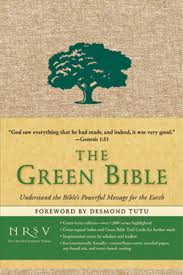
Bestselling Eco-Bible - The Green Bible Again Recycles the Word of God

Walk into any Borders or Barnes & Noble and you will find a Bible section filled with specialty Bibles for every age, gender, and lifestyle. Now we have

The Green Bible (NRSV)
A Study Bible for the Green Movement


an ecologically-friendly book,
  • 1440 pages
  • printed on recycled paper
  • uses soy-based ink
  • cotton and linen cover
  • over 1,000 verses printed in green ink
(I love that they've played played on the tradition of printing Jesus's words in red to highlight the "green scriptures" throughout the Bible. A picture of a page from the Psalms is on the left.)

Apparently the first 25,000 copies sold within a few weeks.

Bibles are more than just carriers of Scripture. Bibles are proud badges of identity. We choose Bibles that resonate with us (like the Catholic Study Bible, Teen Study Bible, and the African Heritage Study Bible). We want our Bibles to reflect on what is most important to us.

If you have ever taken time to purchase your own Bible, which one did you choose? What does that Bible say about you?

Even more, we look at other people's Bibles as indicators of who they are. Having the right Bible has often been a test of orthodoxy. NKJV/NASB versions of the Ryrie, Scofield, and the Thompson Chain Reference Bible scream conservative, while the NRSV version of the Annotated Oxford Bible is solidly mainline.

The first green-letter Bible shouts "Green!" And by including writers from a broad spectrum, it tries to side-step theological dogma in order to promote caring for the earth as a spiritual lifestyle. The Green Bible includes essays from N. T. Wright, Barbara Brown Taylor, Brian McLaren, Matthew Sleeth, Pope John Paul II, and Wendell Berry. The Green Bible is supported by groups like the Sierra Club, The Humane Society, and the Eco-Justice Program of the National Council of Churches.

Notice how these Bibles are "Study" Bibles? Although the word-translations among these Bibles (whether NIV, ESV, TLB, etc.) is similar. What distinguishes these Bibles are the notes, commentaries, and arrangement of materials inserted throughout the text to reinforce the overall thrust of the book. Editors of these Bibles become the most significant shapers of content. From a cynical perspective, Bible publishers catch trends and associate special edition Bibles with the name of a major personality.

From a more generous perspectives, we know biblical texts are used as launchpoints to discussing different aspect of Christian discipleship. These Bibles become tools for individuals and groups to emphasize various aspects of the faith for various interest and demographic groups.

A bit more on The Green Bible is available from the publisher's website here.


Friday, December 26, 2008

Moleskine Art

Many of us enjoy our Moleskine notebooks, handy tools with pocket, ribbon, and elastic band to keep our thoughts together.

But others are taking this little book to a whole new level - creating art. Here's one example:

When I see art like this, it reminds me how far my imagination has yet to stretch.

This is only one example. Sketches, paints, portraits, fanciful images, collages, even pop-up books -- the uses for these little sketch books is amazing.

For more images and ideas, check out these links:

http://www.smashingmagazine.com/2008/10/22/moleskine-art-beautiful-examples-and-talented-artists/

http://www.boingboing.net/2008/04/16/public-skineart-mole.html

http://www.boingboing.net/2007/04/17/jim-woodrings-popup-.html

http://octolan.com/moleskine/

http://www.skineart.com/

Thursday, December 25, 2008

Giving Up My Brain to Media - New Book


The Great Brain Suck: And Other American Epiphanies

New book on consequences of American media saturation. Is this book talking to me?