Showing posts with label Knowledge Management. Show all posts

Monday, May 18, 2009

Twittering Religion in America - Part 2

Quick post: This is my second of two posts on the use of Twitter by congregational leaders. I'll focus on the use of Twitter by individuals rather than organizations...

Image representing Twitter as depicted in Crun...Image via CrunchBase

Although congregations using Twitter during worship services has gotten some media attention, the use of religion through Twitter is more than just worship "tweets."

I'll pass on talking about other organizations that use Twitter like Islamic Relief (a non-profit organization) or Islamic Crunch (focusing on activities of all sorts in the Muslim community) or Talk Islam (blogging all things Islam) -- religious organizations of all sorts are finding Twitter provides a low-cost way to raise awareness and communicate updates.

Instead, I've started following a few church leaders on my own Twitter account and notice a few, distinct uses of the service.

(Caveat: Not all leaders do this ALL the time, but I'll suggest what I see as an informal pattern.)

1. Purposeful - Some leaders consistently stay "on message" through Twitter.

Twitter Meta Moo! too far?Image by Josh Russell via Flickr


Leonard Sweet
Erwin McManus

Here's what I mean - some leaders remain vision-focused leaders through Twitter, keeping their followers encouraged, uplifted, and focused on the values and purposes of their life. This includes leaders who post aphorisms, proverbs, quotes, and key phrases with every tweet. Look at Len Sweet's quotes and expansion of Biblical key words. See Erwin McManus's references to being "wide awake."

2. Provocative - Leaders put out questions and "what if" statements to provoke responses.

Naeem Fazal
Alex McManus

There are other leaders who want to initiate dialogue and get reactions. Using a spare 14o characters, they attempt to provoke thinking and prompt follow-up posts from other people. Naeem Fazal tweets, "Question: Do you have an irrational confidence in the faithfullness of God?" and "Is failure resolved by success or by faithfulness ?" and "Was there a time that you trusted God more than you do now ... What happened?" Alex McManus tweets, "Does talent emerge due to external factors (Gladwell, Outliers), proper practice (Coyle, Talent Code), or nature (Gallup, Strengthsfinder)?" and "What would happen if we planted gardens and designed natural sanctuaries instead of planting and building churches?"


3. Promotional - Leaders use Twitter to keep people up to date with their books, speaking engagements, blog posts, and other resources and events surrounding their ministry.

Take That!Image by barron via Flickr


Eric Bryant
Ed Stetzer

Church leaders using Twitter are often busy people who travel, speak, write, and consult to groups nearly every day. Their life is a near-constant whirl of activity, and they use Twitter to let people (both friends and "fans") know what's new with them. Eric Bryant links his blog posts to his Twitter account and regularly gives away free copies of his book. And Ed Stetzer continually developes new material which he often makes available on the internet.


4. Personal - Still other leaders talk mostly about their leisure and family activities.

Alan Hirsch
Sam Radford

Church leaders can be very open about the movies they watch, the restaurants they try, and the various happenings with their spouse and children. Reading their posts, you get a feel for the rhythm of their lives away from "the office." Alan Hirsch and Sam Radford are two who keep us informed of their sleep habits, places they visit, conversations with friends, and any "plans-of-the-moment."


5. Mixed-Use

:Image:IPhone_Release_-_Seattle_(keyboard) cro...Image via Wikipedia


Jay Bakker
Dan Kimball

While some leaders have one primary "Twitter Profile," most have mixed uses. Through a series of tweets, they broadcast vision, provoke thoughts, indicate their speaking and writing activities, and talk about their day-to-day lives -- all in a single day! Jay Bakker and Dan Kimball are faithful in providing their Twitter followers a steady stream of thoughts and activities.

These are the 5 uses of Twitter I see among church leaders today.

Any others I've missed?

Wednesday, February 25, 2009

Richard Florida on the Future of Cities

I wrote this week on how churches are adjusting their ministries to the Creative Class. The man who coined the term, Richard Florida, wrote a nice piece on how the current economic crisis affects the future of cities.


Not everyone agrees with Richard Florida. He's bold, provocative, and prefers "Big Picture" ideas over nitty-gritty details. But many people resonate with his ideas, and I think he's got some thoughts we need to consider.

In The Atlantic, Florida throws down a few more bombs. I'll pull out a few sections of the article. Focusing on the current economic crisis, he writes:


Main Idea

Some cities and regions will eventually spring back stronger than before. Others may never come back at all.


New York - Model and Icon


Times Square - New York City, New York / ニューヨー...Image by Jose P Isern Comas via Flickr

[For example,] New York is much, much more than a financial center. It has been the nation’s largest city for roughly two centuries, and today sits in America’s largest metropolitan area, as the hub of the country’s largest mega-region. It is home to a diverse and innovative economy built around a broad range of creative industries, from media to design to arts and entertainment. It is home to high-tech companies like Bloomberg, and boasts a thriving Google outpost in its Chelsea neighborhood. Elizabeth Currid’s book, The Warhol Economy, provides detailed evidence of New York’s diversity. Currid measured the concentration of different types of jobs in New York relative to their incidence in the U.S. economy as a whole. By this measure, New York is more of a mecca for fashion designers, musicians, film directors, artists, and—yes—psychiatrists than for financial professionals.


Talent-Attracting, Talent-Clustering, Talent-Producing Cities

book coverImage via Wikipedia

The great urbanist Jane Jacobs was among the first to identify cities’ diverse economic and social structures as the true engines of growth. Although the specialization identified by Adam Smith creates powerful efficiency gains, Jacobs argued that the jostling of many different professions and different types of people, all in a dense environment, is an essential spur to innovation—to the creation of things that are truly new. And innovation, in the long run, is what keeps cities vital and relevant.

Chicago has emerged as a center for industrial management and has rolled up many of the functions, such as finance and law, once performed in smaller midwestern centers. Los Angeles has a broad, diverse economy with global strength in media and entertainment. Miami, which is being hit hard by the collapse of the real-estate bubble, nonetheless remains the commercial center for the large South Florida mega-region, and a major financial center for Latin America. Each of these places is the financial and commercial core of a large mega-region with tens of millions of people and hundreds of billions of dollars in output. That’s not going to change as a result of the crisis.

city map chemnitzImage by benedict stuart via Flickr

Big, talent-attracting places benefit from accelerated rates of “urban metabolism,” according to a pioneering theory of urban evolution developed by a multidisciplinary team of researchers affiliated with the SantaFe Institute. The rate at which living things convert food into energy—their metabolic rate—tends to slow as organisms increase in size. But when the Santa Fe team examined trends in innovation, patent activity, wages, and GDP, they found that successful cities, unlike biological organisms, actually get faster as they grow.

In order to grow bigger and overcome diseconomies of scale like congestion and rising housing and business costs, cities must become more efficient, innovative, and productive. The researchers dubbed the extraordinarily rapid metabolic rate that successful cities are able to achieve “super-linear” scaling. “By almost any measure,” they wrote, “the larger a city’s population, the greater the innovation and wealth creation per person.” Places like New York with finance and media, Los Angeles with film and music, and Silicon Valley with hightech are all examples of high-metabolism places.


Metabolism and talent-clustering are important to the fortunes of U.S. city-regions in good times, but they’re even more so when times get tough.


Who's in Trouble

While the crisis may have begun in New York, it will likely find its fullest bloom in the interior of the country—in older, manufacturing regions whose heydays are long past and in newer, shallow-rooted Sun Belt communities whose recent booms have been fueled in part by real-estate speculation, overdevelopment, and fictitious housing wealth.


Cities in the Sand: The End of Easy Expansion

The Sun Belt, highlighted in redImage via Wikipedia

Some Sun Belt cities—Phoenix and Las Vegas are the best examples—developed economies centered largely on real estate and construction. With sunny weather and plenty of flat, empty land, they got caught in a classic boom cycle. Although these places drew tourists, retirees, and some industry—firms seeking bigger footprints at lower costs—much of the cities’ development came from, well, development itself.

To an uncommon degree, the economic boom in these cities was propelled by housing appreciation: as prices rose, more people moved in, seeking inexpensive lifestyles and the opportunity to get in on the real-estate market where it was rising, but still affordable. Local homeowners pumped more and more capital out of their houses as well, taking out home-equity loans and injecting money into the local economy in the form of home improvements and demand for retail goods and low-level services. Cities grew, tax coffers filled, spending continued, more people arrived. Yet the boom itself neither followed nor resulted in the development of sustainable, scalable, highly productive industries or services. It was fueled and funded by housing, and housing was its primary product. Whole cities and metro regions became giant Ponzi schemes.


On Suburbanization

An aerial view of housing developments near Ma...Image via Wikipedia

Every phase or epoch of capitalism has its own distinct geography, or what economic geographers call the “spatial fix” for the era. The physical character of the economy—the way land is used, the location of homes and businesses, the physical infrastructure that ties everything together—shapes consumption, production, and innovation. As the economy grows and evolves, so too must the landscape.

Suburbanization was the spatial fix for the industrial age—the geographic expression of mass production and the early credit economy.

For the generation that grew up during the Depression and was inclined to pinch pennies, policies that encouraged freer spending were sensible enough—they allowed the economy to grow faster. But as younger generations, weaned on credit, followed, and credit availability increased, the system got out of hand. Housing, meanwhile, became an ever-more-central part of the American Dream: for many people, as the recent housing bubble grew, owning a home came to represent not just an end in itself, but a means to financial independence.

On one level, the crisis has demonstrated what everyone has known for a long time: Americans have been living beyond their means, using illusory housing wealth and huge slugs of foreign capital to consume far more than we’ve produced. The crash surely signals the end to that; the adjustment, while painful, is necessary.

Economy of American SamoaImage via Wikipedia

But another crucial aspect of the crisis has been largely overlooked, and it might ultimately prove more important. Because America’s tendency to overconsume and under-save has been intimately intertwined with our postwar spatial fix—that is, with housing and suburbanization—the shape of the economy has been badly distorted, from where people live, to where investment flows, to what’s produced. Unless we make fundamental policy changes to eliminate these distortions, the economy is likely to face worsening handicaps in the years ahead.


Major Takeaway

The economy is different now. It no longer revolves around simply making and moving things. Instead, it depends on generating and transporting ideas. The places that thrive today are those with the highest velocity of ideas, the highest density of talented and creative people, the highest rate of metabolism. Velocity and density are not words that many people use when describing the suburbs. The economy is driven by key urban areas; a different geography is required.

The housing bubble was the ultimate expression, and perhaps the last gasp, of an economic system some 80 years in the making, and now well past its “sell-by” date. The bubble encouraged massive, unsustainable growth in places where land was cheap and the real-estate economy dominant. It encouraged low-density sprawl, which is ill-fitted to a creative, postindustrial economy. And not least, it created a workforce too often stuck in place, anchored by houses that cannot be profitably sold, at a time when flexibility and mobility are of great importance.

So how do we move past the bubble, the crash, and an aging, obsolescent model of economic life? What’s the right spatial fix for the economy today, and how do we achieve it?


Read the article - especially the last section - to hear Florida's suggestions for the future.

Friday, February 20, 2009

A 5th Way Economic Woe Affects Scholarship and Innovation

Quick update: After my post on economic woes for academics yesterday, I knew I would find even more.

As the Dow Jones Average appears to drop again today, the current economic woes continue to affect scholarship and innovation in many ways. In addition to yesterday's list, I'll add one more:


5. Institutions are canceling sabbaticals and faculty leaves which are almost always oriented toward initiating, expanding, or renewing research efforts.

The Chronicle for Higher Education reports that Kent State University canceled faculty sabbaticals for 2009-10 to save money.

This affects 60 professors and will save the public university about $500,000. The University of Georgia is another institution that canceled leaves abruptly, just days before the start of the fall term, for faculty research leaves that had been canceled for the 2008-9 year.

Hard to argue with the numbers. And there's little sympathy outside academia since sabbaticals are seen outside the academic world as a luxury. But this isn't about professors and their work conditions. It is about the continual churning of research and innovation.

The mill of careful, scholarly work turns slowly, and demands a level of concentration and persistence that is almost impossible to appreciate at a distance. Sabbaticals are actually earned -- the majority of professors must apply for such privileges with written justification for what is to be accomplished during that time and follow-up reports when they return. More importantly, the exchange of ideas through travel and paid leaves is vital, and the time to work without interruption necessary for creative work.

Wednesday, January 28, 2009

Embedding Innovation at the Core of Your Organization Part 1

Innovation is often thought of as "edge activity," something that happens on the margins and eventually breaks mainstream. Not necessarily. Some of the largest corporations in America put innovation at the center of their business. Whirlpool has an "innovation pipeline" at the core of its operations. What would creating an innovation pipeline mean for congregations? Here is part 1 of 3 of some thoughts on innovation and congregation.


Innovation at the Center

I found an interesting article on Forbes.com about Nancy Snyder, a leader in stimulating innovation at Whirpool. Look around your house and it's likely you have more than a few Whirlpool products -- it's the world's largest manufacturer of household appliances.

For Snyder and her colleagues, innovation is not an "extra" but a core competency to be developed in their organization.

From the article:
Under Nancy's leadership, Whirlpool began a bold initiative in 1999 to greatly increase the new ideas emerging within the company and change where they came from and how they were implemented.

In other words, her team's goal was nothing less than embedding, as she put it, innovation as part of the core of the company's operations.

Creating an Innovation Pipeline

What is key to making innovation central at Whirlpool? From my reading of the article, it lies in creating an "innovation pipeline" which includes:
  • InnovationImage via Wikipediaenrolling every salaried employee in a business innovation course,
  • tying management's long-term bonuses to its innovativeness,
  • building an innovation Intranet portal that would offer everyone in the company a common forum for learning principles of innovation,
  • keeping abreast of recent research,
  • tracking the progress of ideas from concept toward realization, and
  • volunteering to work on one another's projects.
A team suggesting an innovation has to prove that the idea or concept it was championing met three criteria:
  1. It had to bring a benefit to the customer,
  2. it had to create a competitive advantage and
  3. it needed to return value to our shareholders.

Whirlpool now has a team of about 1,100 innovation mentors, what they call "I-Mentors." They volunteer to facilitate the innovation cycle throughout the company.


Resources from the Whirlpool Innovation Gurus

Snyder is co-author of two books on innovation:


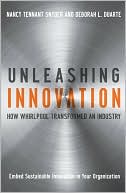
Unleashing Innovation: How Whirlpool Transformed an Industry

Strategic Innovation: Embedding Innovation as a Core Competency in Your Organization

The article is at Forbes.com and includes an interview with Nancy Snyder.


Stay Tuned for Parts 2 & 3 in the Series

Tomorrow, I will apply these principles to congregations in Embedding Innovation at the Core of Your Organization Part 2.

The day after in Part 3, I will share some of my research -- examples of innovation processes from an innovative congregation.