Sunday, February 20, 2011

Pentecostalism and Prosperity Theology: Symposium at Regent University

The end of 2010 through the beginning of 2011 have been among the busiest--and most productive--months of my academic life.  I've submitted articles, completed book chapters, reviewed several articles and textbooks, and prepared papers for various grants and conferences.  I've also finally completed my manuscript on worship and music in racially diverse churches (more on that in the coming months).

This afternoon, I'm in the midst of final preparations for a symposium happening for the next couple of days at Regent University in Virginia Beach, Virgina.


Pentecostalism & Prosperity Symposium

The Socio-Economics of Global Renewal

Co-sponsored by the Schools of Undergraduate Studies and Divinity

Symposium schedule:
February 21, 2:00-5:30 pm, Library Auditorium
February 22, 2:00-5:30 pm, Library Auditorium


I'm thrilled to join this stimulating conversation.  How is Pentecostalism related to global economics?

The adaptability of Pentecostalism to the current economic system is certainly one of the most interesting aspects of the movement.  On Tuesday, I'll be talking about how prosperity theology connects with today's "individualization" and the rise of "self-culture." 

Hollywood Faith by Gerardo Marti
This is less of a theological exposition than an attempt to connect sociological dynamics of social change.  I attempt to draw out a connection between global economic dynamics and the very real circumstances of individuals, the social psychological "self," that is confronted with historically new challenges. It is an accentuation of an argument made in my Hollywood Faith book. 

If we step back, I think we can all agree that prosperity theology developed with the emergence of modern capitalism.  I believe it resonates with many people today because  the effect of globalized capitalism on  everyday life is experienced so broadly. As society changes, people find forms of religion that fit those changes.

Several theorists (who don't pay much attention to religion) tell us that the broader workforce today must master self-promotion for economic survival.  If we then turn to the place of religion in these changes, I note that much of the "work" of religious communities  has as their goal the supporting of a kind of “self” needed to live in the world today. The modern "self" today largely lives in context of work.  Being a wage-earner has become enormously important, more so than any other period in history.

When we appreciate the economic uncertainty of individuals in advanced capitalism, the emphasis on a vigorous, God-empowered self can be seen as a way to adapt to the demands for work today.

Healing ServiceImage via Wikipedia
Healing Service
So what can appear to be an ego-oriented religion can work within a viable religious community.  In other words, prosperity theology can resonate with ambitious individuals who, in their experience, find their goals to be frustrating, systems overwhelming, yet gain great confidence in that God can, wants to, and (eventually) will use them to fulfill cosmic purposes as they at the same time achieve personal fulfillment in a world-affirming way.

In prosperity-oriented churches, individualism coexists with the general call for generosity and self-sacrifice because the individual is seen as the conduit by which God will accomplish his purposes on the earth.  The focus on the individual is not about individual self-promotion but about creating a platform as an ambassador of the kingdom of God to engage in activities that allow God to work in the world at large.

It is a win-win solution; God fulfills his missional purposes, and his people live prosperous, fulfilling lives.

My paper for the symposium lays out more detail on all these processes.  In addition, the symposium will encourage an active dialogue on how this argument is right/wrong, and surely provide many additional considerations.

If you're interested, the presentations will be live on the internet (see symposium website), and the papers will be collected into an edited volume in coming year. I'll post as things become available.
Enhanced by Zemanta

Wednesday, October 20, 2010

Hacker Ethics and Higher Learning: The Moral Clash Determining the Future of Education

Special thanks to Joe Creech and the good people of the Lilly Fellows Program for an enjoyable time of conversation on the nature of "place" in our professional lives as scholars in higher education. 

I'm just recovering from a very full conference schedule with the Lilly Fellows Program in Humanities and the Arts annual conference held this year at Valparaiso University.  My warm thanks are extended to the many new friends and colleagues I met over several meals and dozens of conversations.

It was an honor to be invited to give a keynote address along with two other notable scholars.

Seal of Valparaiso UniversityImage via Wikipedia
The conference revolved on the notion of "place" in higher education and, appropriately, there was a scholar of art and architecture, a theologian working on issues of globalization, and myself, a sociologist who pays attention to religion and social change. I focused on the transformation of higher learning welling-up from the cumulative transformations in digital connectivity.

My talk revolved around two moral orientations, two moral "codes" if you will, that are clashing (rather than converging) in higher education today.  The first code is the formative retreat ethic that stresses the moral imperative of creating a cloistered space of education that works toward discipline and even piety. Our institutions of higher education have an underlying moral orientation: a formative retreat for the cultivation of virtuous adults. I speculate that the stronger the religious orientation of the college, the stronger the formative moral imperative of the institution.

On the other hand is a new ethic, a Hacker Ethic, that emphasizes openness, free access, and utter playfulness. The Hacker Code, Hacker Ethics, and Hacker Culture – these are terms I use heuristically to describe a nascent, overarching ethos that has fueled the development of our increasingly “connected” (I mean digitally, online, networked connected) lives from the 1950s until now. Various principles are involved (I give several lists and descriptions in my talk), and much of it centers on digital connectivity.

What I stressed to this esteemed group of scholars and administrators is that higher education is caught in a larger transition. Banks, phone companies, and our local and federal governments are all firmly committed to open internet connectivity. For example, the federal government just announced at the end of September that while we can still physically mail our returns, more people are e-filing and, as a cost cutting measure, the federal government will no longer mail tax forms, but we must access them online. Examples could be multiplied many times over.

Our schools are dominated by this connectivity as well – Barry Wellman on twitter recently wrote, “Student finds it impossible to go cold turkey off the grid because official announcements & research materials are only online.” The internet is not just a tool of knowledge and business but has become something much more.

Hacker Culture logoImage via Wikipedia

We submit grades online, our students register for courses online, use electronic course reserves (72% of professors use course management systems), answer questions, set calendar appointments, distribute departmental information and committee reports, and even submit journal articles and whole book manuscripts. Increasingly we post syllabi and study content, we skype into meetings, we blog and tweet (about one-third of professors as far as I can find a statistic) our results.  Administrators are pushing internet connectivity to solve certain problems and scholars are using internet connectivity to solve others.

It took me a while… but I soon saw that there was a new set of ideals being promoted. What fuels the development of these new digital realms is not just clever innovation but a new morality, what’s been called the Hacker Ethic. Hackers represent those who were taking advantage of the new spaces and new possibilities opened by the creation of new structures. It’s an entire moral orientation.

Although you can't see the Power Point slides emphasizing different points, here's part 2 of 4 parts of the keynote available on YouTube:


More on the "Hacker Ethic" can be found in part 3.

I'm grateful for the time at Valpo and a new set of conversations.  Certainly there are many others who understand these dynamics far better than I do and can speak far more articulately about them.  But this was my chance to package my best understanding of the things that affect my life and work everyday.  And I'm convinced they are propelling more substantial changes that threaten our traditional understandings of higher education in unanticipated ways.

Wednesday, October 6, 2010

2011 Summer Research Seminar: Congregations and Social Change


Congregations and Social Change:
Adaptation and Innovation among Religious Communities
June 27 - July 22, 2011

I will be directing a research seminar at Calvin College next summer. This is an open invitation:


Seminar Description

This research seminar will closely examine the ongoing relationships between congregations and processes of broad ranging, societal change. By incorporating a historical sensitivity and scholarship rooted in a sociological perspective, the seminar will continually connect societal arrangements with adaptation, reaction, innovation, and experimentation in congregational beliefs and practices. The focus will be on congregations of all types (whether church, synagogue, temple, or mosque) and encourages a look at both interpersonal dynamics (beliefs, micro-exchanges, small group interaction, etc.) as well as more macro-level phenomena (globalization, technological shifts, political systems, etc.).

The analytical perspectives on congregations can include --
  • singular case studies, particular historical periods,
  • whole denominational networks (Mormon wards, eastern orthodox churches, Jewish synagogues, mosques and Islamic centers as well as Hindu, Sikh, Jain, Zoroastrian and other religious temples and missions),
  • types of congregations (small, rural, independent, mega, etc.),
  • regional centers (Southern California, Manhattan, Chicago Metro), and
  • any other appropriate and manageable arena of analysis.

The seminar also welcomes any aspect of congregational life that can be examined in relation to social change, for example,
  • changes or comparisons of liturgical design,
  • formation and negotiation of political identity,
  • mobilization tied to extra-congregational organizations or social movements,
  • creation of age-targeted ministry (twenty-somethings to retirees),
  • incorporation of creative arts,
  • negotiated relationships between religious and civic service structures or public agencies,
  • adoption of online social networking or use of new media and technology,
  • management of multiethnic/multiracial dynamics,
  • etc, etc.

Seminar participants will read sociological and historical literature, engage ethnographic methodology commonly employed in contemporary research, and discuss their own work toward creating a community of scholarship oriented around common concerns. Ideally, each participant will produce a polished piece of writing as a result of the seminar, eg., completing a conference paper, journal article, dissertation chapter, book chapter, or publishable mass-media article. As participants work on their own congregations and social change research during the seminar, they will receive guided feedback in a supportive environment. Housing, daily lunch with other scholars, library access, and a small research stipend is provided for seminar participants.

Who May Apply

This research seminar is most intended for current and recent doctoral students in fields related to religious and organizational studies (sociology, anthropology, history, ethnic studies, folklore, and others). While the seminar is designed toward social science-oriented scholars holding, or advanced to candidacy for, the terminal degree in their field (typically the PhD), I eagerly welcome humanities-oriented scholars as well theologically-oriented participants from seminaries and divinity schools. To the extent possible, I will select a group diverse in gender, ethnic, confessional, and disciplinary backgrounds, and with a variety of research sites (i.e., the confessional and/or social identities of the communities they plan to study). I also plan to choose among applicants a mix of participants ranging from doctoral candidates through recent doctorates in tenure-track positions and scholars working on their first or second books to mid-career scholars retooling with defined projects.


on the director, guest speakers, and application process.

Application information is at the bottom of the page. Deadline is January 14, 2011.

Monday, September 13, 2010

Dietrich Bonhoeffer and Martin Luther King Jr.

Leaving my office, I always pack up a few books to read every night, the choice being a mixture of necessity and desire. Today I find myself entangled in the lives of the German pastor, theologian, and martyr Dietrich Bonhoeffer and the American preacher, activist, and slain hero Martin Luther King, Jr.
3. Martin Luther King, Jr., a civil rights act...
Today I picked off my shelf Ferdinand Schlingensiepen's Dietrich Bonhoeffer 1906-1945. Martyr, Thinker, Man of Resistance and another new book, The Word of the Lord Is Upon Me: The Righteous Performance of Martin Luther King, Jr., by sociologist Jonathan Reider.

It was only as I packed the books that I began to see the remarkable parallels between these two men.

These are two men brutally cut short in their lives; two men who struggled through the unique oppressions of their day; two men who had deeply faith-oriented lives that drove them to confront the ugliness in the world while keeping in step with their own sense of community and brotherhood.

Both appreciated education and preached with distinctive combination of intellect and passion. Both studied sociology and applied insights to their worldviews. Both admired people outside their immediate faith, especially Gandhi. Both men could be characterized as lovers with an array of relationships that connected them deeply to the people around them. Both were writers who left profound works which still occupy our thoughtful attention today.
Dietrich Bonhoeffer - among others - lecturer ...
And their greatness may lie in that both attended to the larger issues of the world, provoking new theological responses to changing circumstances because, well, neither of them could leave things as they were.

It might go without saying that this is not my first encounter with either man. They've commanded my attention off and on for well over 20 years. But the well of Martin Luther King Jr. and the well of Dietrich Bonheoffer are both deep. Writers, theologians, and everyday people are continuing to draw endless insight and inspiration from these two men. My studies and my questions continue to bring me back to them, again and again.

Tonight, as these new books allow me to reflect even more closely one to the other, perhaps the insights this time will be even more surprising. And also perhaps therefore tonight they will prove to be even more transformative.

Friday, September 3, 2010

Reading, Reading, and More Reading

I'm on my way out with family for the Labor Day Weekend, and as on other longer trips the biggest decision to make is not what to wear, it's what to read. I have a stack (okay, I actually have several stacks) of books to get through, a mix of personal and "business" reading, covering vast realms of fiction (literature, poetry, graphic novels) and nonfiction (history, philosophy, biography, social sciences, and more) that I hope to complete in the next year or two or five....

As I look at my own stack(s) of books and deciding what to take on our family trip, I'm reminded of how much I appreciate the opportunity I have to CHOOSE what I have to read. As a scholar, there is certainly a mix of "want to" and "have to" reading, but overall I devour writing that attracts my interest and my fascination while avoiding or skimming those that are more obligatory.

But as I'm writing this, I am also reminded that my professional duties occasionally assign me to read a less-than-satisfactory tome. Even so, I almost always find that what I had never intended to read becomes just as or even more valuable to me as something I had intended to read a long time.

For my students this semester, reading is more "forced" on them -- I'm thinking of several of them who are no-doubt slogging through dozens and even hundreds of pages this Labor Day Weekend in preparation for next week's classes.

One set of students is beginning James Cone's remarkable Malcolm and Martin in America, a book that will further prepare our understanding of Barack Obama's presidency and help place it in the context of other modern African American leaders and the political circumstances they faced.

Another set of students is making their way this weekend through Emile Durkheim's Elementary Forms of Religious Life, a book that has had it's reputational ups & downs but which sociologists, anthropologists, and scholars of religion will at least reluctantly agree with it's significance for developing analytical conceptions of religious & social life.

One student is reading through Karl Marx's Grundrisse, a is sort-of a thick, rough draft of Das Kapital that weighs in at well over 800 pages.

And another student is beginning to work through Max Weber's masterful writings collated in Economy and Society -- one of my personal favorite books of all time.

As they make their way through these readings I hope my students will have the same experience I often do: required reading may not have been my personal preference, but in the end these readings become among the most memorable and thought-shaping of my life. The unfamiliarity and uncertainty involved in such texts stimulates a close attention to the words that "beach reads" and bestsellers rarely demand. In addition, the need to talk and write about such texts with other "smart" people cultivates an engaged standpoint that encourages us to draw out (and sometimes tear out) the unstated implications of found in these works.

So as I leave behind my stack(s) of books this weekend, I wish my students with their own growing stack(s) of "to read" books well with the hope that they will have a positive and even transformative experience. What may have been "required reading" today may very well someday be considered "must-read" in the near future.

Monday, August 23, 2010

Superman, Batman, and... Mumita! - Islam Conqures Comic Book Genre

A quick post: I've been noticing interesting mixtures of religion and popculture lately, mostly because I think people are wrong to believe that the appeal of popular culture exists only among certain brands of Christian Protestantism seen to be crassly consumerist and dumbed-down accomodationist. But the effort to remain lively and relevant are found among all religious orientations.

Enter the 99!

Created by Dr. Naif Al-Mutawa, the 99 is a comic book series in the style of Justice League or X-Men that unites a band of superpowered youth to bring peace into society under the leadership of the brilliant Dr. Ramzi.

The backstory returns to the Middle East, the attempt to preserve a library of knowledge being destroyed by war, and a mystical-chemical process of inscribing knowledge into 99 gemstones. Fast-forward to our modern day, and our heroes discover their powers and their brilliant mentor form a team to save the world.

The "origins issue" can be downloaded online.

The writers freely draw on allusions of other successful comic book series. After all, they want to be successful and believe they can learn from the models of the greatest characters created in the past century.

But perhaps the most interesting is the upfront attempt to introduce comic book heroes that reflect the virtues of Islam and are consistent with beliefs of Muslims worldwide. This makes the development of this graphic art series ripe for sociological study: how do the comic book creators fashion an Islamic-friendly graphic that can appeal to the various, globally-diffused orientations within Islam?

I've not read much of the series, so I have yet to see blatant reference to prayers or readings from sacred texts. At most, someone online has already joked about Wonder Woman being "fully clothed" in an forthcoming six-issue team-up with DC comics JLA in October. Besides this, it is hard to tell just how "religious" this series will be.

But I do know this: What is special about the number 99? Why are there 99 gemstones and 99 heroes? Because the characters are intended to display the 99 attributes of Allah.

Just like the Hollywood Christians I write about in my book Hollywood Faith, the series is intended to support and accentuate religious values. Yet it is intended to do so in a way that is unobtrusive to telling a good story. When you read the last page of the "origins issue," the creator is clear that the comic is intended for a Muslim audience, fashioned in what he calls an "East-Meets-West" fashion that combines the fierce independence of heroes of the West (Superman, Batman, Spiderman) and the team-work comeraderie of the East (a la Pokeman).

More on the use of popculture in the Arab world is found in a talk given by Shereen El Feki.

Overall, the intent is to correct the view of Islam as an intolerant religion through a humble framework, accessible to children. There is even a 99 theme park in Kuwait prominently displaying the heroes as awe inspiring icons. According to this news story, this is the Middle East's first theme park.

And while success is hard to measure, the comic is already translated in various languages, is conveniently available online for digital download, has already been put into a computer animated format, is teaming with other important comic book publishers, receiving good media attention, and the creator is committed to making this bold venture a striking presence on the global stage.

Watch a TED talk from the creator and more on the comic book series.

Thursday, August 19, 2010

Back from Atlanta: More Books and Better Relationships

Just returned from the annual meetings of the Association for the Sociology of Religion and the American Sociological Association in Atlanta, a "two-fer" that gives the meetings a turbocharged schedule.
Midtown Atlanta, Peachtree Street.Ray Devlin via Flickr
This year's meetings were once again full of wonderful experiences including sessions on theory, race, and ethnography, and plenty of interaction on a range of issues in religion both domestic and international. An author-meets-critics session with Christian Smith over his new book Souls in Transition was a wonderful highlight, as well as a nice exchange between emerging church leaders Doug Pagitt, Tim Hartman, and Troy Bronsink, along with anthropologist James Bielo who is currently writing a book on the emerging church to be published with New York University Press.

I was part of several other sessions including an "Engaged Scholars" panel that included Margarita Mooney (UNC Chapel Hill), Kathleen Jenkins (William and Mary), and Sascha Goluboff (Washington and Lee) talking about aspects of opportunity and challenge for faculty working among religious communities as well as a fascinating session that combined reflections on citizenship, place, bodies, and religious identity with Lynn Davidman, Nurit Stadler, and Kevin McElmurry with Mary Jo Neitz offering brief commentary.

Besides sessions, the book exhibit was rich for me. William Roy's new book Reds, Whites, and Blues provides an important reflection on music and race that will be required reading in the coming weeks for the book I'm writing. Add The Entrepreneurial Group, also from Princeton University Press, which fits into new research I'm preparing with the oh-so-smart Kevin Dougherty at Baylor that emphasizes that entrepreneurs are not lone actors accomplishing brilliant strategic vision but rather are immersed in social relationships that allow their entrepreneurialism to flourish. (No inclusion of religion there -- Stay tuned as our project focused on innovation and entreprenuership among church leaders develops).

books in a stack (a stack of books)austinevan via FlickrAdd to that a stack of wonderful new books including several I recommend to you: Jesus, Jobs, and Justice; The History of White People; When a Heart Turns Rock Solid; The Word of the Lord is Upon Me: The Righteous Performance of Martin Luther King Jr.; a new set of lectures on Social Theory by Hans Joas; and Backlash 9/11: Middle Eastern and Muslim Americans Respond. Those are some that I took home, but more are coming in the mail including Max Weber in America; Privilege: The Making of an Adolescent Elite at St. Paul's School; and a rich little book by Martha Nussbaum titled, From Disgust to Humanity: Sexual Orientation and Constitutional Law (the actual book info here). Yep - the annual book haul was awesome this year!

Finally, great chance to meet up with friends, charming and bright to a person. And I appreciate several new friends I met along the way. The next big meeting is the Society for the Scientific Study of Religion being held in Baltimore this year. I'm already looking forward to it.

Saturday, July 31, 2010

Open Session: Scholars and National Leaders of the Emerging Church Movement

I just created a *facebook* invitation for a special session organized at this year's Association for the Sociology of Religion in Atlanta, Georgia. Free, open, and sure to be stimulating, this is going to be a real hoot - All are welcome!


Time
August 13 · 3:00pm - 5:30pm

LocationHyatt Regency Atlanta, International Tower Level, Cairo/Hong Kong Rooms

Created By

More Info
Critical dialogue featuring Doug Pagitt, Troy Bronsink and Tim Hartman, along with anthropologist James S. Bielo and sociologist Gerardo Marti. Join us for a unique exchange on the promise, challenge & future of Christianity hosted by the Annual Meetings of the Association for the Sociology of Religion - an international, interdisciplinary association.

MAP & LOCATION BELOW

Session begins promptly at 3:15pm - arrive by 3:00pm to save your seat!

Atlanta, GA - Hotel Map & Room Floor Plan - Cairo/Hong Kong Room -

http://atlantaregency.hyatt.com/hyatt/images/hotels/atlra/floorplan.pdf;jsessionid=3D7ADA7CA1DCC18CB2CF43C18D458E4E.atg01-prd-atg1

Full meeting program highlights here:

http://www.sociologyofreligion.com/2010%20ASR%20Annual%20Meeting%20Prilim.htm
Not only are the special guests coming from across the country offering a rare opportunity for constructive dialogue, but anthropologist James S. Bielo will be talking about his own "ethnographic observations" of emerging church dynamics.

The meeting will also bring together an international, interdisciplinary group of scholars active in all forms of religious research. The experience and expertise being gathered in this room will be tremendous.

Wednesday, July 28, 2010

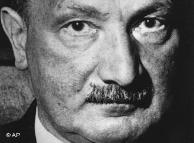
Heidegger and the Quandary of Insider/Outsider Roles in Religious Research: A Methodological Note

This week afforded me a bit of reading and reflection through Heidegger’s Being and Time as part of my ongoing attempt to grow in my scholarship.

As an ethnographer, I regularly immerse myself in religious communities both short and long term -- see a recent post at Duke Divinity blog about a recent church visit -- and as such am regularly confronted with what was introduced to me as “the insider/outsider problem of religion.” The dilemma centers around a core question: Who is best able to understand religion, the committed or the agnostic? More important, what are the challenges and solutions for achieving a satisfactory understanding of religion (not just for scholars, but for everyone) considering one’s stance? My first attempt to answer this question is printed in an extended appendix of my first book A Mosaic of Believers. But reading that now, and continuing to think on the issue, I’m finding my framing of both the problem and the answer to be much too glib.

My methodological answer is essentially that immersion in a religious community along with a simultaneous immersion in a scholarly community allows scholars enough “distance” to reasonably comment on issues and concerns of scholars without being unredeemably caught up in the interests and pretensions of any particular religiously committed sphere. It’s a serviceable answer, passes muster for the pragmatic work most social scientists do every day.

Yet I continue to find the issue to be important, not the least of which is that I consider myself to be a religiously committed person. I am not entirely comfortable with the notion of a self that is caught in a back-and-forth motion, swinging between two blatantly idealized communities, and sustaining an assurance that I am able to not only keep these things in check but to truly believe that the doing of such a thing accurately represents our lived experience as researchers.

Looking back on my experience in doing the work of two ethnographies in the past ten years, I find my resonance, my “affinity,” to the churches I studied to contain more complexity than I usually have the time or the patience to consider. Not only did my stance as a sociologist create some tensions with in first
study of Mosaic, but then my later relationship to the energetic Prosperity/Word of Faith church Oasis (another article here) produced entirely new ambiguities as many aspects of the religiosity found there does not entirely lie with all my religious sympathies. Especially at Oasis, the boundaries of being an “insider” became so fluid (usually in considering all aspects of figuring out to what degree am I part of these people) that I no longer found the neat division between “insider” and “outsider” I wrote about in my appendix to be so helpful – and that perhaps my articulated stance is dangerously misleading to my scholarship.

This week I’ve been taking a trip through Martin Heidegger’s Being and Time (with help from Magda King) and am once again captured by his articulation of “authenticity” or “owned-ness” of our selves. Heidegger sees our humanity as ever-always caught up in the doing-of-things as we continually project ourselves into the world. But Heidegger’s important nuance is that we “fall” into the world by being so-easily enrapt in the an everydayness among fellow beings such that we don’t ever stop to consider the wider implications of what we are doing (descriptive) or, especially, the possibilities of who we may become (prescriptive) should we grasp onto our available limits within our finitude.

His point is especially important to me as a researcher. Looking back at my initial answer to the question of the “insider/outsider problem,” Heidegger suggests that I may be leading a dis-owned, inauthentic existence in my methodological approach because I merely “fall” into the ways of being within these two communities. On the one hand I take on the lifeways of a religious community, and on the other hand articulate, translate, commiserate with the lifeways of a scholarly community, with my work constantly going back and forth across the in-between void in my person juxtaposing two seemingly “isolated” positions in an endless array until a satisfactory product (Book! Tenure! Career!) resolves itself -- which then propels into a new cycle.

It’s Heidegger’s notion of authenticity and “owned-ness”/"disowned-ness" that’s got me. He’s profoundly right that our normal day-to-day life, even as highly self-aware scholars, is to be caught up in our ways without question. It’s one of the liberating aspects of being historians and sociologists – we come to see through distance how embedded human beings are in the structures of their world without their being conscious of it. And it is the privilege of scholars that we self-consciously reflect on ourselves and our various apprehensions in order not to "fall" easily prey to facile pretensions of what we think we know. I strongly value this primary privilege of scholarship, the ability to embrace our self-reflexivity in productive ways, and I fear that my first answer to the study of religion misleads the earnest task of becoming a more-wholly-self-possessed person who is accomplishing the uniquely human task of carefully considering all the potentialities for yielding insights and knowledge in our world.

Heidegger's point becomes even more salient when I consider the dominating aspects of institutionalization – that human beings ritualize ways of being and knowing in such easy, non-problematic ways. I come to this: If religious scholarship is simply learning to engage the institutionalized spheres of “religion” on the one hand, and then articulate them within the institutionalized spheres of “scholarship” on the other, then we “fall” into highly ritualized ways of being that radically limit the potentialities for our work. Here I will quickly mention Courtney Bender’s wonderful new book The New Metaphysicals (see current dialogue at Immanent Frame) which thoughtfully engages the issues of institutionalization in religious life and in scholarship in a fresh way. The book has got me thinking about a lot of things (It is a wonderful conversational read), and it seems to fit this particular dynamic well. Her focus on “practices” is strategic, and it is perhaps this approach I must absorb even moreso since it appears to allow Bender to be far more “self-possessed” than I feel at the moment.

In the end Heidegger stimulates my courage to consider how it is that I regularly constitute my world not merely in my role as "scholar" but as a full person. I no longer wish to maintain a pretense of bounded areas which do not touch one another, especially when I am fully aware that it is “me” (the “I am”) who is engaged in my whole life. Rather than "fall" into a false sense that I am merely receiving and recording on the one end, then resolving and reporting on the other, knowledge in such simple-minded ways, I'm thinking that f I am to continue to grow as a scholar I must take much better possession of my own self and extract whichever awareness with accompanying conceptualizations as best I can so as to more fruitfully participate in truly authentic dialogues with my colleagues and other "beings" around me. It is hopefully taking the best aspects of the best conference sessions with the most stimulating, original, and engaged minds which I've witnessed at conferences and seminars over the years and accentuate that to a much higher degree into my work with friends, neighbors, and (dare say) even my own self.

So, with more historians of American religion engaging in ethnographic practices I thought it might be worthwhile sharing these few preliminary thoughts here. Whether it is Heidegger or the resources from the historian’s craftbox or somewhere else I'm missing, I am in need of a much different conversation on the ability to sustain an “owned” scholarship of religion that respects our ongoing engagement with the world that maximizes the creative potential of our as-yet-unyielded insights.

Crossposted at the ever-stimulating Religion in American History blog.