Wednesday, April 15, 2009

Blog Interview with Gerardo Marti on Hollywood Faith

Quick post: I recently completed a radio-type interview on my recent book now available online.


I got an email a few weeks ago from my friend Alex McManus, creator of Voxtropolis and founder of the International Mentoring Network, along with Sam Radford, leader of Mosaic Sheffield, England, and consultant with Awaken Consultancy about their new venture. As you can see, these guys are busy!

Cover of Cover via Amazon


Alex and Sam were kind enough to invite me for an interview on their "blogtalk" radio program IMN Central about my new book Hollywood Faith. The program, All Things M, features about 30 minutes of conversation between Alex, Sam, and myself, and is now available online.

Alex is author of a brand new book, Making the World Human Again: The Quest to Save the Future from Religion. Sam has his own blog also.

One more thing -- Sam is organizing events for the IMN and Mosaic Alliance through Mosaic Sheffield. In particular, look for The Human Event happening in October of this year. The website gives more information on what will be a provocative, intimate, and international gathering of entrepreneurial-minded church leaders.

Tuesday, April 14, 2009

New Conference for New Evangelicals (and Those Who Want to Know Them)

Quick post: Another new conference is available in April in Orlando, Florida. The Exponential Conference -- the 2009 National New Church Conference -- is themed on "The Art of Movement." I try to pay attention to different conferences happening out there as a measure of church activity, and this is certainly one of the more interesting happening this year.


The list of speakers for this conference is another current "who's who" of influential evangelicals from around the country speaking to the current interests and concerns of entrepreneurial-minded church leaders. You can browse and click links to churches, organizations, book titles, and personal websites to enter this interconnected world or relationships. My friend Erwin McManus from Mosaic in Los Angeles opens the conference at the first plenary session.

The conference also hosts podcasts, and there are several available online, including:

Podcasts

Image by Mingo.nl via Flickr


Sessions from last year's 2008 conference are available also. The sessions from the "Multi-Ethnic Track" were particularly interesting to me; you may find others.

Besides seeing and meeting people 24/7, conferences like this give you an intense exposure to the perspectives and concerns among the newer generation (post-Moral Majority) evangelical leaders in America. Another key bonus is the long list of special sessions available before and during the conference. These are practical sessions that problem-solve issues in chatty, interpersonal contexts.

Take a look at this list from the conference catalog. The "preconference intensives" include:

A Gillmor Gang podcast at Gnomedex 6.0.Image via Wikipedia

Even with a short list like this, click to explore the values, "convictions," and buzz-words currently used around the evangelical table. The "tracks" of the conference highlight the organizational concerns of these largely independent leaders:

Pre Launch - preparing for starting a church

Post Launch - what to do once it's rolling

Reproducing Church Movements - launching other mission-driven churches

Multi-Ethnic - how to address racial and ethnic diversity

Missional Church Planting

Nuts and Bolts - over 30 sessions on hodge-podge leadership concerns

Church Planting Spouses - and how to keep your marriage in the midst of it all...

Overall, here's an interesting gathering that speaks to the current issues and concerns of some of the more interesting and vibrant developments in American Christianity.

Monday, April 13, 2009

A Week in Berkeley - Course in Creative Leadership

I've just accepted an invitation to return to the Pacific School of Religion, a seminary affiliated with the Graduate Theological Union which happens to be the largest and most diverse partnership of seminaries and graduate schools in America. I will teach a one-week intensive course on leadership.

Color: Fiber FestivalGothic inspired architecture on PSR's campus - Image by >>>WonderMike<<< via Flickr


I am happily returning to Berkeley the first week of August 2009. The course details are below, and more detail is available on PSR's summer session webpage.

Catalyzing Creative Leadership for the Emerging Church
Instructor: Gerardo Marti, PhD
Date and Time: August 3-7, 2009; 8:30 am -12:30 pm
Course School Ownership: PSR

Units: Audit ($330.00)
2 Continuing Education Units ($355.00)
1.5 Semester Hours (General - $636.00; Current PLTS/PSR Student - $523.00)

Description:

This course explores the relationships between culture and the emerging church and the implications of these relationships for effective spiritual leadership.

In addition to references to church history and biblical scriptures, the course continually connects societal arrangements with contemporary innovation and experimentation in congregational beliefs and practices.

By incorporating scholarship rooted in a sociological perspective, the course also looks more generally to the ongoing changes and negotiations that the Christian Church always makes in relation to the broader social world.

Photographed by Doug Dolde along the Big Sur c...Northern Coast of California - Image via Thinkin

Trust me, this will be an enjoyable week together, so if you can make it over to Berkeley -- a wonderful city during a beautiful part of the year in California's fantastic Bay Area -- please join us!

Thursday, April 9, 2009

Assistant Professor Gerardo Marti Named King Professor of Sociology

During a busy time with my family, I am pleased to receive the announcement that I have been honored with an endowed professorship at Davidson College.

Davidson, North CarolinaChambers - a prominent building on the Davidson College campus. Image via Wikipedia


As the L. Richardson King Assistant Professor of Sociology, I will return to campus in the fall continuing my research scholarship in addition to continuing to develop new courses at the college.

The donors honored Dr. "Richie" King with this professorship out of appreciation for his thirty-eight year career in mathematics at the college characterized by his devotion to students and his development of sophisticated models for real-world issues in ecology. I had the privilege of meeting Professor King -- energetic, engaging, interested -- early this past week.

You can read more about the endowed professorships awarded this academic year on the Davidson College website.

Monday, April 6, 2009

My Bookshelf Runneth Over

Quick post: The kids are on Spring Break this week, which means my personal plans are delayed by at least that long. Oh well.

The picture here is a portion of one bookshelf -- most of my "currently reading" and "to read" books at the house are mixed in here, with the other large pile at my office. I am desperately trying to keep up with my review commitments (I've done the article manuscripts, and 2 books are currently due) as well as my own general flow of knowledge-intake to keep up with my own interests and the swirl of developments in the world.

For fiction, I am currently enjoying Sea of Poppies by Amitav Ghosh and on religious history I am thrilled with Witnessing Suburbia: Conservatives and Christian Youth Culture by Eileen Luhr. If I get through these by Wednesday, I'll be happy.

Besides more reading, I have a few other projects this week and traveling a bit. I'll post a few thoughts as they come together.

Until then, the kids need some lunch...

Saturday, April 4, 2009

Birchat HaChammah - Locating the Sun on Its Day of Creation

Jews like Rabbi Bleich believe that the sun next Wednesday occupies the same location in the firmament as it did when it was formed on the fourth day of Creation, which would have been Wednesday, March 26, of the Hebrew year 1, otherwise known as 3760 B.C.

From the New York Times:

Aristarchus's 3rd century BC calculations on t...Aristarchus's 3rd century BC calculations on the relative sizes of the Earth, Sun and Moon, from a 10th century CE Greek copy. Image via Wikipedia

According to the celestial calculations of a Talmudic sage named Shmuel, at the outset of spring every 28 years, the sun moves into the same place in the sky at the same time and on the same day of the week as it did when God made it. This charged moment provides the occasion for reciting a one-line blessing of God, “who makes the work of creation.”

Self-effacing humor aside, Rabbi Bleich has inadvertently caught a cultural wave. A man who proudly eschews the computer, relies on his secretary to print out e-mail for him, and still owns and uses a rotary phone, he has seen Birchat HaChammah catch on more widely among American Jews than ever in his memory.

Rabbi Bleich draws on a range of Judaic liturgy, commentary and legal codes, as well as the mathematical fine points of the solar, lunar, Julian and Gregorian calendars, to parse the purpose of Birchat HaChammah.The same brief prayer — consisting of the basic syntactical root for most blessings and three culminating, specific Hebrew words — is also used to express awe and wonder at physical grandeur (the Grand Canyon) and creative acts visible as they happen (lightning, meteor showers).

Grand Canyon, Arizona. The canyon, created by ...Image via Wikipedia

The Reform and Conservative movements, along with the Orthodox, have put increased attention on the blessing this year. It has, for many liberal Jews, become interwoven with environmental activism. Birchat HaChammah also appeals to followers of and dabblers in Jewish mysticism.

As the historian Jonathan Sarna of Brandeis University pointed out in a recent interview, taking part in Birchat HaChammah asks relatively little from a not-so-religious Jew.

“Frequent rituals, like saying kaddish every day, are difficult to maintain, and without strenuous effort they cease to be meaningful,” Mr. Sarna said.

“Infrequent rituals — those performed annually or once in a life cycle, like a bar mitzvah, or in this case once in 28 years — are by definition more exotic and it is easy to draw meaning out of them,” he said. “In all religions, the infrequent rituals are more widely observed and tend to be more beloved than the frequent ones.”

Friday, April 3, 2009

What's a Blue Kiwi? Innovation through Social Network Software

Quick post: My interest in innovation and online social networking led me to discovering new software designed to stimulate organizational innovation.


In Europe, blueKiwi 2009 was launched last November with a bold presentation on the interaction between the web and human interaction. Working with sociological principles, the software re-thinks the interconnection of networks and the play of organizational management dynamics.

Too many of us take software design for granted. But the ingenuity of software design aligned with the understanding of human social interaction is coming into its own -- especially as social computing becomes more portable and more readily available.

Now we've all got to be schooled in how to use more than "Microsoft Word" and email. Social networking is becoming just as important as the telephone. And as organizations harness the use of these technological innovations, we will find new ways to communicate, brainstorm, share content, and "group think" in dynamic, yet-not-entirely-forseen ways.

In short, the new wave of project management and committee work will move online.


According to a post by Jon Husband, "Starting from the vantage point of the Web 2.0-savvy user, they have designed and built blueKiwi to be user-centric whilst responding to the business issues that require the building, distributing and and deploying of business-focused knowledge … the essence of social business computing, in my opinion."

Husband describes blueKiwi as "centered on the building, nourishing and sustaining of business-focused relationships - building useful knowledge and getting things done."
[M]ost collaboration systems start from the point of view of technical capabilities and do not make it easy, or overlook, the building and growing of relationships. In the past, users of collaborative platforms had to go about building their business relationships, both internally and externally, outside of the collaboration system / platform. blueKiwi2009 is first and foremost a means of building valuable and value-added relationships in the course of doing one’s work … it can enable, contain and manage all the activity in a business ecosystem.
An online "ecosystem" is exactly the right term for describing the vision of these software designers.

Here is an interesting and, to me, persuasive attempt to foster a stimulating space of content and interaction. And once businesses really get behind the building of such systems, the leaders of science, education and religion will not be far behind.

Husband continues in describing the uniqueness of blueKiwi --
[A]ll collaboration platforms offer spaces where people can connect, gather, share and exchange information. Thus far, the mainstream approach has been to offer spaces where people can connect and gather, and then share content … information about issues, problems, and areas of interest, and as people exchange and collaborate, useful knowledge is built.

bK2009 turns this upside down, or around (you choose). It is designed on the principle that the collaborative space is there for content and its distribution, and the individual user then chooses which groups she or he wishes to engage with. Thus, any individual user can be a member of the groups they have chosen to interact with. And of course it has a Twitter clone as one of its features.

What eventuates is a network of interaction around pertinent content, and thus over time an ecosystem around issues in which engagement is de facto defined by the users’ interest and willingness to engage. This then leads to the ability to watch and quantify the volume of interactions and obtain a better, and visible , understanding of the value that is being created (responsiveness, innovation, deepening understanding and so on).
In what Husband calls “natural sociology of knowledge work,” the software allows people to enter and exit any "information ecosystem" they wish. The combining of features we know through Facebook, Twitter, LinkedIn, and blogging -- as well as the archiving of documents and drafts -- allows a constructive yet constantly changing space of idea-generation and product-design. Husband says, "the result after several years of intense design, development and deployment is a collaborative platform that in my opinion more closely mirrors the natural sociology of knowledge work than any other platform about which I know."

Individuals can be known by the "reputation" they build for being involved in different ecosystems in addition to whatever "profile" they create to identify themselves.


The software is oriented around Metcalfe's Law of Networks "whereby the value of a network is proportional to the square of the number of connected members of the network" even though not everyone agrees on this "law." Nevertheless, the software is based on a belief that "organizations should realize that collaboration in connected networks is the way work will be done all the time in the near future, and so organizations should seek to enroll and engage the entire organization in the use of the collaborative platform."

Image representing iPhone as depicted in Crunc...Image via CrunchBase

I find this fascinating. Once all of us (including tech-infatuated people like me) get over what may initially seem "complicated," "unnecessary," and "too much time to learn," I think we will find such software to be remarkably helpful.

The software here is already available on iPhone -- which means that the accessibility to working with a "portable knowledge community" from the comfort of your local cafe will surely change the way we "think" in the world.

I'll speculate and say I think we're seeing the future of the "new normal." Another decade and this will be a natural way to share ideas.


Thursday, April 2, 2009

Creativity Conference - Structuring Innovation and Routinizing the Creative Process

Today, I found out about an interesting conference looking intensely at the process of innovation and creativity to be held in Boston, June 2009. The Creative Problem Solving Institute (CPSI) creates "a hands-on learning experience that allows you to think differently and stretch your beliefs about what is possible."

CPSI's new conference titled "The Revolution of Creativity" features full-week "immersions" to focus on a particular arena of creativity/innovation. Here they are:

1. Revolutionizing Training Design -

"Create meaningful, interactive training based on the principles of how people learn best..."

2. The Art of Innovation -

  • the Sources of efficient creativity (Talent, Energy, Method)
  • a Structure to drive innovation (Individual, Team, Target, System)
  • a Culture that makes creativity a potent force in an organizational context (Ideas, Engagement, Freedom, Humor, Risk)
3. Lateral Thinking For Innovative Leaders -

"
Provides unconventional techniques that help people escape from their usual patterns of thinking to produce enhanced results..."

Thinking LaterallyImage by said&done via Flickr


4. A Revolution for Reinvention - How To:

  • address the concerns of today and interact with change, fear, paradox and unpredictability
  • dance with the future; instead of trying to control it
  • listen to your client so that they are fully seen
  • know when your client is not coachable
  • use the skill that is most appropriate at any place in a coaching conversation
  • access your intuition to enhance your work with your client
  • identify self defeating influences
  • create a powerful trusting coaching relationship that allows you to do the deeper work
  • keep from getting stuck in the details and to stay out of 'fix-it' mode
  • craft the quality of question that taps into the clients’ innate wisdom and passion

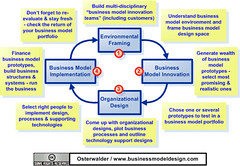
5. Organizational Leadership for Innovation in a Tough Economy - This course addresses the question:

Image by Raymond Yee via Flickr

“How might I lead innovation in my organization even when the economy is in the tank and resources are scarce?”

There's a lot more to the conference. This just gives a brief taste.

The attempt to routinize "creativity" and create a structured process of "innovation" is fascinating. But does it work?

We know there are lots of books available on creativity. Institutions like CPSI have a loyal clientele and a rich source of consultants and workshop leaders to staff their programs so that some semblance of the creative process can be worked through face-to-face interaction.

Overall, the schedule and workshops look interesting.

Business Model Innovation - from framing to im...Image by Alex Osterwalder via Flickr

Wednesday, April 1, 2009

Kosuke Koyama's Water Buffalo Theology

The esteemed and accomplished Kosuke Koyama, an Ecumenical Theologian born in Tokyo, passed away last week, and here's an opportunity to learn about his work.

According to the New York Times,

Dr. Koyama, who taught at the Union Theological Seminary in Manhattan, strove to make the teachings of Christ culturally meaningful to Asians, without sacrificing the essential Gospel message. His 1974 book, “Water Buffalo Theology,” was “one of the first books truly to do theology out of the setting of Asian villages,” Donald Shriver, president emeritus of Union, said in an interview on Tuesday.

Directed at the concerns of peasants, the book points out that Christianity and Buddhism do not communicate; rather, Christians and Buddhists do. Dr. Koyama advocated seeing God “in the faces of people” to achieve good neighborliness among religions. He spoke of trying to “season” the Aristotelian roots of Western theology with Buddhist “salt.”

The book favored communicating about Jesus in culturally comforting words but urged missionaries to criticize and reform a given culture if it was found to be against Christian values.

Dr. Koyama made the book’s case in poetic, not academic, language. As a missionary in northern Thailand, he said, he was inspired to write it as he listened to the “fugue of the bullfrogs” while watching farmers working with buffaloes in the rice fields.

“The water buffaloes tell me that I must preach to these farmers in the simplest sentence structure,” he wrote. “They remind me to discard all the abstract ideas and to use exclusively objects that are immediately tangible. ‘Sticky rice,’ ‘banana,’ ‘pepper,’ ‘dog,’ ‘cat,’ ‘bicycle,’ ‘rainy season,’ ‘leaking house,’ ‘fishing,’ ‘cockfighting,’ ‘lottery,’ ‘stomachache’ — these are meaningful words for them.”

At the end of the article, The Times notes this -
Once, in discussing death, Dr. Koyama recalled the story of Jesus washing the feet of his disciples.

He said Jesus would be with others the same way:“Looking into our eyes and heart, Jesus will say: ‘You’ve had a difficult journey. You must be tired, and dirty. Let me wash your feet. The banquet’s ready.’ ”