| 49-5448 | ML3921 | 2011-18782 CIP |
| Humanities \ General | ||
. Worship across the racial divide: religious music and the multiracial congregation. Oxford, 2012. 266p bibl index afp ISBN 0-19-539297-3, $29.95; ISBN9780195392975, $29.95. Reviewed in 2012jun CHOICE. | ||
| This book is more scientifically grounded in research and study than the title suggests. Marti (sociology, Davidson College) spent more than two years studying the hypothesis that music and worship play an essential role in stimulating diversity in congregations. He found that the hypothesis is incorrect, and that though music and worship are important in multiethnic/multiracial congregations, what is important is not the performance of the service but rather the practices that surround the congregation in the absorption and production of the music. The author devotes a great deal of space to examining the sociological perspective of worship from a practice-based application. He tears down preconceived notions in contemporary worship scholarship about achieving racial diversity and a universal worship experience and about how churches need to focus on their structural practices if they wish to achieve diversity and ethnicity in their congregations. A scholarly, thought-provoking examination of this topic. Summing Up: Highly recommended. Lower-division undergraduates through faculty and professionals. -- B. L. Eden, Valparaiso University | ||
Showing posts with label book reviews. Show all posts
Tuesday, August 14, 2012
"Highly Recommended" - CHOICE Reviews - Worship across the Racial Divide
More feedback continues to come from Worship across the Racial Divide. This one comes from CHOICE Reviews:
Monday, June 25, 2012
5 Stars for "Worship across the Racial Divide" from Christianity Today
Christianity Today has chosen to review my newest book Worship across the Racial Divide: Religious Music and the Multiracial Congregation. In addition to the enthusiastic review from Michael Emerson, a leading scholar of race and religion, the CT editors gave the book a full 5 stars.
The review (and comments from readers) can be found here.
Monday, April 16, 2012
The Diverse Church as Musical Production
Reviews are beginning to come in for my new book Worship across the Racial Divide. The latest one is right here.
A very special thanks to Franklin Golden, co-pastor of Durham Presbyterian Church who posted a very nice, very concise summary and response to my new book at the Faith and Leadership Blog at Duke Divinity.
![]() |
| Review of Worship across the Racial Divide by Franklin Golden |
A very special thanks to Franklin Golden, co-pastor of Durham Presbyterian Church who posted a very nice, very concise summary and response to my new book at the Faith and Leadership Blog at Duke Divinity.
Tuesday, April 3, 2012
Hunger Games & Worship across the Racial Divide
Thanks to Sojourner's Magazine, I'm cool again. My book Worship across the Racial Divide is featured as "New and Noteworthy" on the same page as an article on the blockbuster Hunger Games.
New & Noteworthy
New & Noteworthy
Wednesday, March 28, 2012
Worship across the Racial Divide: An Interview with Gerardo Marti
Historian and friend Paul Harvey posted at the Religion and American History blog a nice little interview with me about my book Worship across the Racial Divide.
Between Tuesday and Wednesday, it will be divided into a set of two posts.
The exchange includes a brief reflection on the relationship between the disciplines of history and sociology. Even more, these brief exchanges provide a glimpse into the core arguments of the book.
Between Tuesday and Wednesday, it will be divided into a set of two posts.
The exchange includes a brief reflection on the relationship between the disciplines of history and sociology. Even more, these brief exchanges provide a glimpse into the core arguments of the book.
Tuesday, April 13, 2010
Tenured and Promoted: Gerardo Marti becomes L Richardson King Associate Professor of Sociology at Davidson College
Last week, Davidson College affirmed my tenure and promotion to Associate Professor.
Long time in the making -- a vote of Davidson College Trustees affirms my "lifetime appointment" as a professor in the Department of Sociology. I continue to hold the L. Richardson King Professorship, and have several new courses in the works for the coming year.
Lots happening here. A few quick items:
I continue to work on a new book project which I hope to complete this fall on music and worship in racially diverse congregations. More on this later.I have a new article just published in the Sociology of Religion: A Quarterly Review titledEgo-affirming Evangelicalism: How a Hollywood Church Appropriates Religion for Workers in the Creative Class
I have two new articles to be published in June with the Journal for the Scientific Study of Religion about African American integration into diverse congregations. I'll post when these come online.I posted a new article at the Duke Divinity Call and Response Blog on a "skirmish" between the Multiracial Church Movement and the Emergent Church Movement.And I am now the Book Review Editor-Elect for the Sociology of Religion journal. Please send good social scientific books my way.I am preparing in my role as Program Chair the annual conference for the Association for the Sociology of Religion. The meetings will be held in Atlanta in August, and I hope to let you know of some sessions you may be interested in attending, especially a session titled "Scholars and National Leaders of the Emerging Church Movement" with Doug Pagitt, Tim Hartman, Troy Bronsink, James Bielo, and yours truly.I continue to serve on the Executive Council for the Society for the Scientific Study of Religion, the Council for the Association for the Sociology of Religion, and the Editorial Board for the Journal for the Scientific Study of Religion.I recently was elected to serve on the Steering Committee for the Religion and Social Science Section of the American Academy of Religion.I will be presenting some interesting research at the annual meetings for the Society for the Scientific Study of Religion in October this year. These are great meetings happening in Baltimore, Maryland, this year.And my book stack continues to grow. Reading a ton of philosophy these days, with a few good reads at the intersection of race/ethnicity, religion, and social change.
I hope you can see why I've not been as regular at posting on the blog these days, but I hope to keep you in touch with interesting things as information becomes available.
Labels:
book reviews,
conferences,
Davidson College,
my research,
new research
Sunday, December 13, 2009
Hollywood Faith: Holiness, Prosperity, and Ambition in a Los Angeles Church - Book Review
Many thanks to Kathleen Hladky at Florida State University (her recent article) who provided a review of my book Hollywood Faith for the H-Pentecostalism thread of Humanities and Social Sciences (H-Net) Reviews Online, a powerful consortium of scholars attempting to provide timely updates of new research.
In the review, she concludes:
You can read the full review here.
In the review, she concludes:

Throughout Hollywood Faith, Marti contributes to the study of Pentecostalism and contemporary Christianity by drawing attention to topics too often overlooked by scholars of religion: the relationship between religion and work, multiracial Christian congregations, and the Word of Faith movement.Overall, her reading of my book shows great sensitivity to the layered themes on religion, economics, and race found there.
You can read the full review here.

Friday, November 13, 2009
Mosaic Bible - The Branding of Devotional Christianity
I agreed to write a "review" of the new Mosaic Bible, a new formatting of the Protestant Scriptures published this Fall by Tyndale Publishers. The publisher provided me a deluxe, imitation leather version. Joining Tyndale's campaign afforded an opportunity for me to look take a closer look at some of the sociological aspects of Bible marketing today.
Walk into any local bookstore, and you will find dozens of choices for bibles today. The production and distribution of market-savvy bibles may surprise some, but it is one of the most interesting developments in modern Christianity.
Crafting Editions of The Word of God
Yet the initial effort to craft these bibles was considerable. It took scores of hours to typeset new bibles, and innovative systems of notations, illustrations, and footnotes created enormous difficulties. Take a glance through any edition of the Thompson Chain Reference Bible to gain an appreciation for the tremendous hours of work required to craft these books as ultimate "Bible Study Tools" intended to take personal reading of the scripture to unprecedented layering of hermeneutic possibilities.
Furthermore, the structuring of "notes" became the occasion to self-consciously promote whole theological systems. Consider the successive editions of the Scofield Reference Bible for its quite specific (and to many people peculiar) discussion of world history, the relationship between Israel and Christianity, and anticipations of eschatological happenings.
Now, the rise of digital typeset and new print techniques (including the ability to print color pages cheaply) have greatly expanded the possibilities for bible formats. Production houses have become increasingly creative in the formation of new types of bibles. While the "text" of the bible (the translation formats) may often be the same, the formatting, illustrations, and notations accompanying the text are what make a new product.
Bibles Proclaim a Brand of Faith
Moreover, bibles are not only intended to provide exhaustive notations but also reorientation toward the faith. In other words, while it may initially seem that "a bible is a bible is a bible," it is important to note that the crafting of a bible is equivalent to forming a strategic presentation of the Christian faith. In short, any carefully designed bible proclaims a brand of faith.
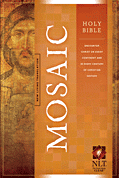
Enter Holy Bible: Mosaic NLT.
The Mosaic Bible strives to make a book primarily meant for meditation and prayer. It claims to be "a new genre of Bible—a weekly meditation Bible." In comparison with the large, white bible that occupied the living room table of my home growing up, the Mosaic Bible is portable and durable. But more than its portability, what makes the bible intentionally geared to personal reflection is that nearly the first half of the whole book is a series of weekly "installments," a set of scripture readings, prayers, reflections, and empty lines (for writing) accompanied by religious artwork. The weeks are aligned with church seasons. (For those who don't know which season it is, a website can be consulted; this is the 26th week of Pentecost ("Righteous Judgment"), pg m314.
The readings and prayers are intended to be diverse, affirming Christianity as a historic and global religion. There are readings from ancient to contemporary authors from every continent and every century. Of course, these excerpts are all highly orthodox and contain the presentation of Christian concepts and virtues to those generally accepted by more conservative Protestant Christians.
There is also a notable striving to affirm of the use of art in religious devotion. Full-color artwork, hymns, and poems are included.
The New Living Translation provides the base scriptural text, a newer, freer English version that allows for contemporary and colloquial speech constructed by a team of (mostly Evangelical) biblical scholars.
So, what is the branding of Christianity that comes through this particular bible?
I would suggest several dominant themes:
My participation in the "blog tour" of the Mosaic Bible certainly indicates that bible publishers are attempting to work with a crowded marketplace. There are already many bibles on the market; the attempt to craft a message to highlight the uniqueness and devotional utility of any new bible presents a considerable challenge. To these ends, Tyndale has a dedicated website, a blog, a twitter account, and a listing of other blog reviews available.
Finally, as part of the marketing blitz for the product, Tyndale is giving away a few copies of this new book. If you are still reading this and are interested in one, the first person to email me with a request will receive a certificate from Tyndale that can be redeemed for your own personal copy.
Walk into any local bookstore, and you will find dozens of choices for bibles today. The production and distribution of market-savvy bibles may surprise some, but it is one of the most interesting developments in modern Christianity.
Crafting Editions of The Word of God
Image via Wikipedia
Yet the initial effort to craft these bibles was considerable. It took scores of hours to typeset new bibles, and innovative systems of notations, illustrations, and footnotes created enormous difficulties. Take a glance through any edition of the Thompson Chain Reference Bible to gain an appreciation for the tremendous hours of work required to craft these books as ultimate "Bible Study Tools" intended to take personal reading of the scripture to unprecedented layering of hermeneutic possibilities.
Furthermore, the structuring of "notes" became the occasion to self-consciously promote whole theological systems. Consider the successive editions of the Scofield Reference Bible for its quite specific (and to many people peculiar) discussion of world history, the relationship between Israel and Christianity, and anticipations of eschatological happenings.
Now, the rise of digital typeset and new print techniques (including the ability to print color pages cheaply) have greatly expanded the possibilities for bible formats. Production houses have become increasingly creative in the formation of new types of bibles. While the "text" of the bible (the translation formats) may often be the same, the formatting, illustrations, and notations accompanying the text are what make a new product.
Bibles Proclaim a Brand of Faith
Moreover, bibles are not only intended to provide exhaustive notations but also reorientation toward the faith. In other words, while it may initially seem that "a bible is a bible is a bible," it is important to note that the crafting of a bible is equivalent to forming a strategic presentation of the Christian faith. In short, any carefully designed bible proclaims a brand of faith.
Enter Holy Bible: Mosaic NLT.

The Mosaic Bible strives to make a book primarily meant for meditation and prayer. It claims to be "a new genre of Bible—a weekly meditation Bible." In comparison with the large, white bible that occupied the living room table of my home growing up, the Mosaic Bible is portable and durable. But more than its portability, what makes the bible intentionally geared to personal reflection is that nearly the first half of the whole book is a series of weekly "installments," a set of scripture readings, prayers, reflections, and empty lines (for writing) accompanied by religious artwork. The weeks are aligned with church seasons. (For those who don't know which season it is, a website can be consulted; this is the 26th week of Pentecost ("Righteous Judgment"), pg m314.
The readings and prayers are intended to be diverse, affirming Christianity as a historic and global religion. There are readings from ancient to contemporary authors from every continent and every century. Of course, these excerpts are all highly orthodox and contain the presentation of Christian concepts and virtues to those generally accepted by more conservative Protestant Christians.There is also a notable striving to affirm of the use of art in religious devotion. Full-color artwork, hymns, and poems are included.
The New Living Translation provides the base scriptural text, a newer, freer English version that allows for contemporary and colloquial speech constructed by a team of (mostly Evangelical) biblical scholars.So, what is the branding of Christianity that comes through this particular bible?
I would suggest several dominant themes:
- A bible can be aesthetically pleasing, yet should still evoke a pious consideration of the "sacredness" of the book as traditionally understood.
- The bible is to be a personal, devotional tool such that the notations in "your" bible will not be the same as those in "my" bible.
- However, the bible is not meant to be read "individualistically," but in the context of a broader community of believers through history.
- The bible is to be read regularly and systematically.
- The bible is most profitably read accompanied by prayer and focused reflection on themes.
- Although structured devotions are useful, individuals should take corporate themes as launchpoints for personal reflections and commitments.
- Bible study tools including cross-references, dictionary, maps, and concordances, are now "assumed" as essential in personal bibles.
- The use of contemporary translations means that there is a recognition that the spiritual value of the bible is not found in traditional words or phrasing but rather in the meaning of those words to the extent they can be accurately conveyed.
- And the aggressive marketing of a bible is appropriate in that the goal is not self-promotion as much as the distribution of a tool that gets people to read the scriptures for themselves.
My participation in the "blog tour" of the Mosaic Bible certainly indicates that bible publishers are attempting to work with a crowded marketplace. There are already many bibles on the market; the attempt to craft a message to highlight the uniqueness and devotional utility of any new bible presents a considerable challenge. To these ends, Tyndale has a dedicated website, a blog, a twitter account, and a listing of other blog reviews available.Finally, as part of the marketing blitz for the product, Tyndale is giving away a few copies of this new book. If you are still reading this and are interested in one, the first person to email me with a request will receive a certificate from Tyndale that can be redeemed for your own personal copy.

Labels:
bible,
blogs,
book reviews,
Pastoral Resources,
Protestants,
religious studies,
worship
Friday, August 7, 2009
Religious Historian Ed Blum Brings New Jersey Sensitivity to Reading Hollywood Faith
Over at the Religion in American History blog, historian Edward J. Blum, author of WEB Du Bois: American Prophet, brings a suburban New Jersey sensitivity to reading my book Hollywood Faith.
Professor Blum writes,
Blum is a gifted historian who brings a wealth of understanding to the intersection of race and religion, especially in the African American experience,
Blum's expertise makes his assessment of my discussion of the Black Church sooooo very much appreciated.
Read his full post is over at the Religion in American History blog.
Professor Blum writes,
Growing up in suburban New Jersey – where making money, just saying “no” to drugs, and interrupting people as a way to show you care were the cultural norms and the entertainment industry was something way out there – I never thought too much about religion and film.
I tried to avoid movies with too much swearing or nudity (except for the time a youth group friend compelled me to see Natural Born Killers, which I still haven’t recovered from; yes, Kevin Pepper, you scarred me for life). Southern California is a different animal. If you aren’t in a band or trying to land your Screen Actors’ Guild card, you can’t be very important. The entire culture confuses me.
Thank goodness for Gerardo Marti. An incredible interpreter of congregational life...
Blum is a gifted historian who brings a wealth of understanding to the intersection of race and religion, especially in the African American experience,
I think Marti is at his best analyzing how Oasis appeals to aspirants in the entertainment industry in ways similar to how historically black churches have appealed to embattled African Americans who often experienced economic problems, setbacks, and frustration more often than whites.
Image by Getty Images via Daylife
Marti suggests, I think brilliantly, that Oasis bridges the gap between older black congregations that looked to “advance the dignity and rights of African Americans as a racial group” and the newer black churches that emphasize “individual upward mobility.”
Blum's expertise makes his assessment of my discussion of the Black Church sooooo very much appreciated.
Read his full post is over at the Religion in American History blog.
Tuesday, June 2, 2009
Journal for the Scientific Study of Religion Reviews Hollywood Faith

It's been about eight months since my book Hollywood Faith
has been out, and that means the academic reviews are only just beginning to appear.
Today I am grateful to professor Kathleen Jenkins, sociologist at The College of William and Mary, whose articulate review of my book is available in this month's Journal for the Scientific Study of Religion. Jenkins authored her own fascinating book Awesome Families: The Promise of Healing Relationships in the International Churches of Christ.
Here are snippets from her review.
Book Review of Hollywood Faith
From Journal for the Scientific Study of Religion June 2009
-- Kathleen E. Jenkins, The College of William and Mary
Hollywood Faith is an engaging ethnography that makes multiple contributions to the sociology of contemporary U.S. religion.
Oasis is the epitome of what scholars have recently named "new paradigm" churches, especially in its creative use of contemporary culture.
Drawing from current studies in work and occupations, Marti locates the majority of Oasis members as creative workers whose occupations leave their employment contingent and often exploitative.
Members are offered a new purpose and fresh identity; through worship and church relationships, individuals come to believe that they are not alone as they engage in self promotion. Instead, personal fame takes a back seat to a common Christian moral purpose.
We feel the power of collective worship, music especially, as rejuvenating ritual.
Hollywood Faith...is provocative in suggesting how contemporary religious organizations might help members negotiate and manage uncertain and exploitative labor markets.
Additionally, the chapters on Hollywood and evangelicalism will certainly be of importance to anyone interested in media and religion.
Finally, the careful attention to congregational dynamics and how they support a multiracial congregation make this a valuable addition to literature on religion, race, and ethnicity.
-- Kathleen E. Jenkins, The College of William and Mary
Tuesday, May 26, 2009
Book Review of Hollywood Faith
Thanks to Amazon.com, reviewer Gordon W. Marchant wrote an articulate, unprompted, and much appreciated review of my book Hollywood Faith.
1 of 1 people found the following review helpful: 5.0 out of 5 stars5 Stars Excellent Starting Point,
Yet -- this is an EXCELLENT book. Here is the key to unlocking this book's value: "Hollywood Faith is not a comprehensive social history of Oasis, and it is not a how-to manual for spiritual revitalization. This book is a sociological interpretation of a church I believe IS SIGNIFICANT FOR UNDERSTANDING VITAL RELIGIOUS TRENDS TODAY" (page 19, emphasis mine). For example - here's a trend. Throughout 2009, we have been dealing with a global recession. The bubble has burst. A critical question to be answered by Christian leaders today is: "How should our ministry adapt to the needs of our people during an economic time such as this?" Now, read: "Hollywood Faith". Here is a church where economic hardship and broken dreams has been a part of their context for years. These Christians "challenge laborers to reconsider their self-identity and their self-worth" (186). This Church has become a model of building authentic community among those who had huge dreams, but now are coming to terms with life's realities. Other vital religious trends? Seeking as Christians to make a positive difference in reference to secular morality (e.g. Hollywood), rather than running and hiding from it. Or, developing multi-ethnic ministry that is truly welcoming and fun! Or, relating to 20-30's unchurched singles so that they feel connected to a local family. Sincerely, thank you Gerardo for using the gifts God has given you. I cannot wait to read your next book! |
Labels:
book reviews,
books,
Christianity,
church,
hollywood faith,
my research,
religion,
social change,
sociology
Monday, April 27, 2009
Christianity Today Editor Suggests "Church Shrink" Conferences
A senior managing editor of Christianity Today, suggests evangelical churches need to become more demanding and that conferences on "How to Shrink Your Church" should be promoted.
Mark Galli says, "I'm not kidding."
What churches need to do is "introduce the harder edges of the gospel" and preach in such a way that attenders actually leave "because they see, finally, what Jesus is asking of them."
That necessitates creating new church conferences to show leaders how to manage decline as pastors demand more from their members.
Yes, welcome to the Church Shrink Conference with special workshops on "Exit Ministries" and answering the question "My Church is Growing, What Did I Do Wrong?"
For Galli, evangelicals may appear successful, but actually they have "succumbed" to "an emotionally and spiritually shallow culture."
He finds his evidence in a new book Holy Mavericks: Evangelical Innovators and the Spiritual Marketplace
.
Co-authors Shayne Lee and Phillip Luke Sinitiere argue that the growing ministries profiled in their book are not strict in doctrine or strict in behavior. Instead, their ministry growth is the result of crafting slick marketing, sympathizing with felt-needs, and appealing to local culture.
Galli is not convinced such growth is the kind of "growth" Christianity needs.
Citing older -- and highly controversial -- research found in Dean Kelly's 1972 Why Conservative Churches are Growing
and Laurence R. Iannaccone's influential 1994 essay, "Why Strict Churches Are Strong," Galli claims much of evangelicalism's past success has been due to the demands of doctrine and behavior placed by these churches on their attenders.
The underlying argument of this research is that strict churches draw people into greater participation in their churches, greater solidarity with other believers, and a greater sense of purpose in living to a harder-edged gospel -- especially in comparison with liberal, mainline churches.
Mark Galli says, "I'm not kidding."
What churches need to do is "introduce the harder edges of the gospel" and preach in such a way that attenders actually leave "because they see, finally, what Jesus is asking of them."
That necessitates creating new church conferences to show leaders how to manage decline as pastors demand more from their members.
Yes, welcome to the Church Shrink Conference with special workshops on "Exit Ministries" and answering the question "My Church is Growing, What Did I Do Wrong?"
For Galli, evangelicals may appear successful, but actually they have "succumbed" to "an emotionally and spiritually shallow culture."He finds his evidence in a new book Holy Mavericks: Evangelical Innovators and the Spiritual Marketplace
Co-authors Shayne Lee and Phillip Luke Sinitiere argue that the growing ministries profiled in their book are not strict in doctrine or strict in behavior. Instead, their ministry growth is the result of crafting slick marketing, sympathizing with felt-needs, and appealing to local culture.
Galli is not convinced such growth is the kind of "growth" Christianity needs.
Citing older -- and highly controversial -- research found in Dean Kelly's 1972 Why Conservative Churches are Growing
The underlying argument of this research is that strict churches draw people into greater participation in their churches, greater solidarity with other believers, and a greater sense of purpose in living to a harder-edged gospel -- especially in comparison with liberal, mainline churches.
Image by cromacom via Flickr
Strict churches, therefore, grow more and faster than looser, low-commitment congregations.
Galli admits (I'm sure reluctantly) that "Many churches are growing because they preach a God of second and third and fourth chances, and a faith that gives palpable hope, joy, and acceptance. What's not to like?"
He concedes that the "gracious aspects of the faith" are attractive.
Yet, Galli goes against the strict church research to argue that strict Christian groups are small. "The more strictly you adhere to the teachings of Jesus, the smaller the church will 'grow.'"
What is his core belief? Galli believes that theologically better churches with strict moral standards may be numerically small, but they are spiritually superior despite less attendance. "These theologically conservative and morally strict communities are not winning converts by the tens of thousands."
Of course, Galli is conveniently ignoring that most morally "non-strict" communities aren't growing either. Galli is also dismissing that 1) few churches are large (like 1,000+ attenders), and 2) the "accommodation to culture" has been happening even among "strict" evangelicals since they began.
(See my recent posts on the ministry of Charles Finney.)
Never mind all that. There is a clear vision in Galli's mind of what churches should be like, and this new book
really irks conservatives like him who hope that the future of American religion does not follow any of these various developments.
Instead, Galli believers pastors and leaders in "superficially successful" churches need to introduce the difficult demands of the gospel. And this introduces us to the tricky notion of how to measure any congregation's "success."
Perhaps Galli would object less to the ministries of Mosaic
or Oasis
as I describe them. While these are certainly not conservative churches in his mold, they do call people to high standards while simultaneously accommodating to a changing culture. I don't quite know.
I'm confident strict churches will survive well into the 21st Century, but I am not so sure that the development of evangelicalism as a whole will follow this path ignoring an accommodation to the life circumstances of people's contemporary situations.
Instead, Galli believers pastors and leaders in "superficially successful" churches need to introduce the difficult demands of the gospel. And this introduces us to the tricky notion of how to measure any congregation's "success."
Image via Wikipedia
Perhaps Galli would object less to the ministries of Mosaic
I'm confident strict churches will survive well into the 21st Century, but I am not so sure that the development of evangelicalism as a whole will follow this path ignoring an accommodation to the life circumstances of people's contemporary situations.

Monday, April 20, 2009
Charles Finney and His Calculated Ministry
Finished reading Charles Finney's memoirs published in 1876 last night. Much of the book focuses on his plea for innovation for the sake of evangelism.
On a recent trip to California, I stopped in a religious store that sells a largely unsorted collection of used books. I was looking for treasure, and I found it.
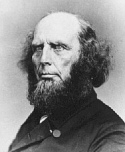
On the floor and at the end of a row of "overflow" books that would not fit on an already overstuffed bookshelf I found an unassuming green book, yellowed with age and frayed at the spine. The square-ish little bundle had a simple title: CHARLES G. FINNEY - and that was enough for me.
The 477 page book, complete with a portrait of the famous evangelist, turned out to be a first edition of his autobiography, a book published by Oberlin College (a school built almost entirely on his reputation, fundraising, and booksales) after his death in consideration of the great importance of his life.
The book is a fascinating read. For me, the value of the book is to see Finney's own view of his theological convictions and his methods in his approach to gaining converts. Finney is the original seeker-sensitive preacher.
Toward the end of the book, Finney writes,
Finney often uses terms like "calculation," "means," and "measures" throughout the book that indicate his conscious consideration of methods to provoke conviction and move people to make public commitment toward the gospel.
Indeed, for Finney the lack of revival in any place pointed to a lack of consideration of proper methods. On page 155, he writes, "The great failure of the ministry and of the church, in promoting religion, consisted, in great measure, in the want of a suitable adaptation of means to that end." And on page 154 he writes, "There must be an adaptation of means to the end to be secured," namely conversion.
The means-end discussion is constant through the book, both in its successes and in its failures.
Here's one of his most important methods -- many of you may remember that Finney essentially invented the "altar call," the practice of preachers summoning attenders to move to the front of the service as a sign of their dedication to Jesus and meeting others there who will talk and pray with them, giving them spiritual assurance.
The book tells stories regarding his first use and continual experimentation with altar calls and the use of "the anxious seat" to provoke people to commitment.
Finney's practice was to arrive in town and spend much time living there, even two or six months at a stretch, getting to know people and speaking to them as directly and as plainly as possible.
Although he was criticized by both members and ministers for the failure to use a more religious oratory style, Finney strenuously argued that he would rather be understood than thought merely eloquent.
On page 94 he writes,
Finney usually spoke extemporaneously, speaking from a brief outline, in order to talk to the assembly with the greatest freshness and spontaneity possible. "Indeed, people have often said to me: 'Why, you do not preach. You talk to the people.'" This is one of the ways his "preaching" was set apart from the well-prepared, written-out, and read-aloud sermons of his contemporaries.
He later summarized his ministry, saying,
On a recent trip to California, I stopped in a religious store that sells a largely unsorted collection of used books. I was looking for treasure, and I found it.
Charles G. Finney. Image via Wikipedia
On the floor and at the end of a row of "overflow" books that would not fit on an already overstuffed bookshelf I found an unassuming green book, yellowed with age and frayed at the spine. The square-ish little bundle had a simple title: CHARLES G. FINNEY - and that was enough for me.
The 477 page book, complete with a portrait of the famous evangelist, turned out to be a first edition of his autobiography, a book published by Oberlin College (a school built almost entirely on his reputation, fundraising, and booksales) after his death in consideration of the great importance of his life.
The book is a fascinating read. For me, the value of the book is to see Finney's own view of his theological convictions and his methods in his approach to gaining converts. Finney is the original seeker-sensitive preacher.
Toward the end of the book, Finney writes,
Image by Nate KS via Flickr
"In religion as in every thing else, good sense and sound discretion will, from time to time, judiciously adapt means to ends.His call for "great freedom" comes as a striking, summary statement after reading the many, many stories of conversion and revival. In short, the book is a plea to earnest Christians for innovation in the service of evangelism.
The measures needed will be naturally suggested to those who witness the state of things, and if prayerfully and cautiously used, let great freedom be given to the influences of the Holy Spirit in all hearts."
[emphasis mine.]
Finney often uses terms like "calculation," "means," and "measures" throughout the book that indicate his conscious consideration of methods to provoke conviction and move people to make public commitment toward the gospel.
Indeed, for Finney the lack of revival in any place pointed to a lack of consideration of proper methods. On page 155, he writes, "The great failure of the ministry and of the church, in promoting religion, consisted, in great measure, in the want of a suitable adaptation of means to that end." And on page 154 he writes, "There must be an adaptation of means to the end to be secured," namely conversion.
The means-end discussion is constant through the book, both in its successes and in its failures.
Finney "invented" the altar call. Image by openg via Flickr
Here's one of his most important methods -- many of you may remember that Finney essentially invented the "altar call," the practice of preachers summoning attenders to move to the front of the service as a sign of their dedication to Jesus and meeting others there who will talk and pray with them, giving them spiritual assurance.
The book tells stories regarding his first use and continual experimentation with altar calls and the use of "the anxious seat" to provoke people to commitment.
Finney's practice was to arrive in town and spend much time living there, even two or six months at a stretch, getting to know people and speaking to them as directly and as plainly as possible.
Although he was criticized by both members and ministers for the failure to use a more religious oratory style, Finney strenuously argued that he would rather be understood than thought merely eloquent.
On page 94 he writes,
Finney's preaching was more like a conversation. "How completely they were in the dark in regard to the results of that method of addressing people!" he wrote. "The used to complain that I let down the dignity of the pulpit" and "that I talked to the people in a colloquial manner.""My habit has always been to study the Gospel, and the best application of it, all the time. I do not confine myself to hours and days of writing my sermons; but my mind is always pondering the truths of the Gospel, and the best ways of using them. I go among the people and learn their wants. Then, in the light of the Holy Spirit, I take a subject that I think will meet their present necessities. I think intensely on it, and pray much over the subject on Sabbath morning, for example, and get my mind full of it, and then go and pour it out ot the people."
Image by Dave Siberia via Flickr
Finney usually spoke extemporaneously, speaking from a brief outline, in order to talk to the assembly with the greatest freshness and spontaneity possible. "Indeed, people have often said to me: 'Why, you do not preach. You talk to the people.'" This is one of the ways his "preaching" was set apart from the well-prepared, written-out, and read-aloud sermons of his contemporaries.
He later summarized his ministry, saying,
"Wherever I went, the word of God took immediate effect; and it seemed only necessary to present the law of God, and the claims of Christ, in such relations and proportions as were calculated to secure the conversion of men, and they would be converted by scores."

Finney practiced and continually called for deep prayer for revival, and always attributed the work to the Holy Spirit. Image by Sacred Destinations via Flickr
But don't think that Finney believed conversion was merely an outcome of human manipulation -- far from it. Finney spends much of the book (and writings in other books) talking about the centrality of prayer for revival. And Finney attributes nothing to his self, rather to the efficacious working of the Gospel when properly presented.
It is the work of the Holy Spirit according to Finney. The difference between himself and most of his contemporaries is that they failed to properly understand the working of the Spirit and failed to call individuals to take responsibilities for their personal, active response to the Gospel.

Friday, April 17, 2009
Billy Graham and the Rise of the Republican South

Quick post: Nice review of a new book on Billy Graham by historian Steven P. Miller.
The New York Times Book Review includes a nice review of Billy Graham and the Rise of the Republican South
The book wonderfully weaves politics, religion, and racial relations together around the emerging career of evangelist Billy Graham and the important election of Richard Nixon.
According to the article:
Image via Wikipedia
Graham’s rise to prominence as an evangelist coincided with the turbulent years between Brown v. Board of Education in 1954 and the landmark civil rights legislation of 1964, and throughout that decade he wrote and sermonized in favor of racial harmony, staged desegregated rallies in balkanized cities, and counseled obedience to court rulings and legislation that many of his fellow Southerners were determined to resist. As a voice for both Christian conservatism and racial progress, he served as a bridge between the Old South and the New, and as a model for a region struggling to shed its worst baggage without losing its identity.The book is good, just out (I got my own copy this past week), and a textured historical analysis of the recent, American past we are still learning to understand.
That’s one story. But there’s another story as well, one that paints Graham as a coward and an apologist for racial backlash. He supported desegregation but took few risks on its behalf; he cultivated a studied moderation in a time that cried out for moral clarity; he was more interested in flattering the white South’s self-regard than in calling his region to true repentance. As a steadfast supporter of Richard Nixon’s career, from the 1950s down through Watergate, he simultaneously enabled and embodied Nixon’s “Southern strategy,” which shut civil rights liberalism out of power and turned the region Republican for a generation.
Image via Wikipedia
Neither story is the whole truth, but both are true. And it’s a credit to Steven P. Miller that his “Billy Graham and the Rise of the Republican South,” a study of the evangelist’s relationship to the cause of civil rights on the one hand and the cause of conservatism on the other, does justice to the tensions and complexities involved — for Graham, for the South and for the country.

Saturday, March 28, 2009
H. Richard Niebuhr's Christ & Culture - Only a Beginning
After yet another stimulating conversation with my friend and colleague Doug Ottati (Doug's written several books
), I once again picked up my copy of H. Richard Niebuhr's Christ and Culture
to think about how theology affects one's understanding of culture and social change.
Certainly, any actual observation of members in any local congregation would do the same.
My 50th anniversary edition of this influential book
contains several additions compared to the Harper Torchbook paperback I started to read back in 1992. That one was a crumbling used book with an olive-green cover, yellowed pages, and tiny print. I didn't finish it. I didn't get it.
With this new edition, the editors include an introductory chapter written by Niebuhr that not only summarizes the 5 typologies that characterize orientations to the connection between "the gospel" and "the world" but also spends a profitable moment describing what typologies are and how they should be used. This brief essay provides a smooth transition into the text.
Also, James Gustafson's introductory preface nails home the importance of seeing how typologies function (something sociologists have wrested with from Max Weber's work
) and the misreadings that can happen by misunderstanding their application. Martin Marty's brief introduction is also helpful.

Also, James Gustafson's introductory preface nails home the importance of seeing how typologies function (something sociologists have wrested with from Max Weber's work
So, I am again reading through the book. As you can see, there are several "prefatory" materials, so you can understand how after 2 days I am finally getting to page 1!
Image by Oberazzi via Flickr
The main point I get out of my reading (let me remind you, this is all pre-page 1) is Niebuhr's outstanding observation that --
"[the use of] typology...denies the assumption that there is a single Christian ethics or a single Christian ethical principle. It assumes, on the contrary, that there are multiple principles and a large number of creative individual concretions of the Christian life."
That statement alone is worth the price of the book.
Image by jakebouma via Flickr
Certainly, any actual observation of members in any local congregation would do the same.
By establishing a base of comparison, we can now look at the implications and differentiation of orientations in terms of definitions of culture, approaches to social change, rhetorical strategies for describing changes, decoding discourses and "jeremiads"
of all sorts, and generally helping us think a whole lot better about the religious self in the world.
And generating better thinking about the self and the world is what I think Niebuhr wanted most from this book.
Wednesday, March 25, 2009
Book Review of Hollywood Faith
The first published book review of Hollywood Faith: Holiness, Prosperity, and Ambition in a Los Angeles Church
has just been published.
From CHOICE Reviews April 2009:
Marti (Davidson College) follows up his 2005 book on multiethnic congregations in Los Angeles (A Mosaic of Believers, CH, Jan'06, 43-2867) with this study of the contrast between Christianity and the often-perceived amorality of the media industry in Hollywood. Oasis Christian Center provides the setting for this study in contrasts.
Symbolically housed in an old movie theater with an ersatz Hollywood star on the sidewalk in front of the building dedicated to "Jesus Christ, the Son of God," Oasis unexpectedly combines two streams of members--a diverse collection of people seeking solace from the stress and frustrations of careers in the increasingly fragmented and transitory world of the film industry, and a substantial African American group of worshipers.
Marti uses Oasis as a starting point to review Hollywood's social archaeology, tracing its early history as a quiet, decidedly religious haven to its transformation into Tinseltown and beyond. He finds an explanation for the combination of movie people and African Americans at Oasis in their shared lives of ongoing marginality, stress, and uncertainty in US society.
Addressing the perspectives of students of religion, media and the film industry, and ethnic differences, the book speaks to all three subjects, combining them in a novel, interesting fashion.
Summing Up: Highly recommended. All levels/libraries.
-- E. Carlson, Florida State University
Sunday, February 8, 2009
Pre-Packaged Suburban Life - For Whites Only
If you've never heard of Levittown, here's your chance. This mid-20th Century urban development made home buyers sign a statement saying they would 'not permit the premises to be used or occupied by any person other than members of the Caucasian race.'
A new book on racial relations and urban development is now out.
Levittown: Two Families, One Tycoon, and the Fight for Civil Rights in America's Legendary Suburb
New manufacturing techniques, the demand for homes post-WWII, and new financing schemes (with the surge of kids which we now call "The Baby Boom") coalesced in the creation of planned communities.
A new book on racial relations and urban development is now out.
Levittown: Two Families, One Tycoon, and the Fight for Civil Rights in America's Legendary SuburbNew manufacturing techniques, the demand for homes post-WWII, and new financing schemes (with the surge of kids which we now call "The Baby Boom") coalesced in the creation of planned communities.
Levittown (in both New York and Pennsylvania) produced so many homes that by 1952 the Levitt brothers who created these communities were building one 1 of every 8 homes in America.
In a review of the book, The Wall Street Journal writes,
These urban villages were to
In a review of the book, The Wall Street Journal writes,
With the inauguration of the nation's first African-American president still fresh in our memories, it is easy to forget that not that long ago hard-wired racism underpinned communities all over America -- not just in the states of the old Confederacy -- and that acquiring a home was, for black families, a process often fraught with humiliation and danger.
These urban villages were to
start as complete communities, themselves prefabricated, so to speak, with shopping centers, churches, pools, parks, curved streets for a rural feel and cul-de-sacs where children could play safely. The Levittown customer, declared Bill Levitt, was "not just buying a house, he's buying a way of life."
Do you wish you had more insight on the persistent racial disparities in the United States? Learn more about the discriminatory practices of housing and lending that existed for much of the past century (with remnants still continuing today). The cascade of subsequent effects on jobs, education, and health are profound.
Here's a well-written, well-researched book that highlights this too-often-ignored aspect of urban America.
Subscribe to:
Posts (Atom)