Saturday, July 31, 2010

Open Session: Scholars and National Leaders of the Emerging Church Movement

I just created a *facebook* invitation for a special session organized at this year's Association for the Sociology of Religion in Atlanta, Georgia. Free, open, and sure to be stimulating, this is going to be a real hoot - All are welcome!


Time
August 13 · 3:00pm - 5:30pm

LocationHyatt Regency Atlanta, International Tower Level, Cairo/Hong Kong Rooms

Created By

More Info
Critical dialogue featuring Doug Pagitt, Troy Bronsink and Tim Hartman, along with anthropologist James S. Bielo and sociologist Gerardo Marti. Join us for a unique exchange on the promise, challenge & future of Christianity hosted by the Annual Meetings of the Association for the Sociology of Religion - an international, interdisciplinary association.

MAP & LOCATION BELOW

Session begins promptly at 3:15pm - arrive by 3:00pm to save your seat!

Atlanta, GA - Hotel Map & Room Floor Plan - Cairo/Hong Kong Room -

http://atlantaregency.hyatt.com/hyatt/images/hotels/atlra/floorplan.pdf;jsessionid=3D7ADA7CA1DCC18CB2CF43C18D458E4E.atg01-prd-atg1

Full meeting program highlights here:

http://www.sociologyofreligion.com/2010%20ASR%20Annual%20Meeting%20Prilim.htm
Not only are the special guests coming from across the country offering a rare opportunity for constructive dialogue, but anthropologist James S. Bielo will be talking about his own "ethnographic observations" of emerging church dynamics.

The meeting will also bring together an international, interdisciplinary group of scholars active in all forms of religious research. The experience and expertise being gathered in this room will be tremendous.

Wednesday, July 28, 2010

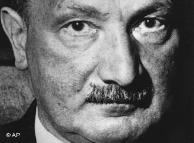
Heidegger and the Quandary of Insider/Outsider Roles in Religious Research: A Methodological Note

This week afforded me a bit of reading and reflection through Heidegger’s Being and Time as part of my ongoing attempt to grow in my scholarship.

As an ethnographer, I regularly immerse myself in religious communities both short and long term -- see a recent post at Duke Divinity blog about a recent church visit -- and as such am regularly confronted with what was introduced to me as “the insider/outsider problem of religion.” The dilemma centers around a core question: Who is best able to understand religion, the committed or the agnostic? More important, what are the challenges and solutions for achieving a satisfactory understanding of religion (not just for scholars, but for everyone) considering one’s stance? My first attempt to answer this question is printed in an extended appendix of my first book A Mosaic of Believers. But reading that now, and continuing to think on the issue, I’m finding my framing of both the problem and the answer to be much too glib.

My methodological answer is essentially that immersion in a religious community along with a simultaneous immersion in a scholarly community allows scholars enough “distance” to reasonably comment on issues and concerns of scholars without being unredeemably caught up in the interests and pretensions of any particular religiously committed sphere. It’s a serviceable answer, passes muster for the pragmatic work most social scientists do every day.

Yet I continue to find the issue to be important, not the least of which is that I consider myself to be a religiously committed person. I am not entirely comfortable with the notion of a self that is caught in a back-and-forth motion, swinging between two blatantly idealized communities, and sustaining an assurance that I am able to not only keep these things in check but to truly believe that the doing of such a thing accurately represents our lived experience as researchers.

Looking back on my experience in doing the work of two ethnographies in the past ten years, I find my resonance, my “affinity,” to the churches I studied to contain more complexity than I usually have the time or the patience to consider. Not only did my stance as a sociologist create some tensions with in first
study of Mosaic, but then my later relationship to the energetic Prosperity/Word of Faith church Oasis (another article here) produced entirely new ambiguities as many aspects of the religiosity found there does not entirely lie with all my religious sympathies. Especially at Oasis, the boundaries of being an “insider” became so fluid (usually in considering all aspects of figuring out to what degree am I part of these people) that I no longer found the neat division between “insider” and “outsider” I wrote about in my appendix to be so helpful – and that perhaps my articulated stance is dangerously misleading to my scholarship.

This week I’ve been taking a trip through Martin Heidegger’s Being and Time (with help from Magda King) and am once again captured by his articulation of “authenticity” or “owned-ness” of our selves. Heidegger sees our humanity as ever-always caught up in the doing-of-things as we continually project ourselves into the world. But Heidegger’s important nuance is that we “fall” into the world by being so-easily enrapt in the an everydayness among fellow beings such that we don’t ever stop to consider the wider implications of what we are doing (descriptive) or, especially, the possibilities of who we may become (prescriptive) should we grasp onto our available limits within our finitude.

His point is especially important to me as a researcher. Looking back at my initial answer to the question of the “insider/outsider problem,” Heidegger suggests that I may be leading a dis-owned, inauthentic existence in my methodological approach because I merely “fall” into the ways of being within these two communities. On the one hand I take on the lifeways of a religious community, and on the other hand articulate, translate, commiserate with the lifeways of a scholarly community, with my work constantly going back and forth across the in-between void in my person juxtaposing two seemingly “isolated” positions in an endless array until a satisfactory product (Book! Tenure! Career!) resolves itself -- which then propels into a new cycle.

It’s Heidegger’s notion of authenticity and “owned-ness”/"disowned-ness" that’s got me. He’s profoundly right that our normal day-to-day life, even as highly self-aware scholars, is to be caught up in our ways without question. It’s one of the liberating aspects of being historians and sociologists – we come to see through distance how embedded human beings are in the structures of their world without their being conscious of it. And it is the privilege of scholars that we self-consciously reflect on ourselves and our various apprehensions in order not to "fall" easily prey to facile pretensions of what we think we know. I strongly value this primary privilege of scholarship, the ability to embrace our self-reflexivity in productive ways, and I fear that my first answer to the study of religion misleads the earnest task of becoming a more-wholly-self-possessed person who is accomplishing the uniquely human task of carefully considering all the potentialities for yielding insights and knowledge in our world.

Heidegger's point becomes even more salient when I consider the dominating aspects of institutionalization – that human beings ritualize ways of being and knowing in such easy, non-problematic ways. I come to this: If religious scholarship is simply learning to engage the institutionalized spheres of “religion” on the one hand, and then articulate them within the institutionalized spheres of “scholarship” on the other, then we “fall” into highly ritualized ways of being that radically limit the potentialities for our work. Here I will quickly mention Courtney Bender’s wonderful new book The New Metaphysicals (see current dialogue at Immanent Frame) which thoughtfully engages the issues of institutionalization in religious life and in scholarship in a fresh way. The book has got me thinking about a lot of things (It is a wonderful conversational read), and it seems to fit this particular dynamic well. Her focus on “practices” is strategic, and it is perhaps this approach I must absorb even moreso since it appears to allow Bender to be far more “self-possessed” than I feel at the moment.

In the end Heidegger stimulates my courage to consider how it is that I regularly constitute my world not merely in my role as "scholar" but as a full person. I no longer wish to maintain a pretense of bounded areas which do not touch one another, especially when I am fully aware that it is “me” (the “I am”) who is engaged in my whole life. Rather than "fall" into a false sense that I am merely receiving and recording on the one end, then resolving and reporting on the other, knowledge in such simple-minded ways, I'm thinking that f I am to continue to grow as a scholar I must take much better possession of my own self and extract whichever awareness with accompanying conceptualizations as best I can so as to more fruitfully participate in truly authentic dialogues with my colleagues and other "beings" around me. It is hopefully taking the best aspects of the best conference sessions with the most stimulating, original, and engaged minds which I've witnessed at conferences and seminars over the years and accentuate that to a much higher degree into my work with friends, neighbors, and (dare say) even my own self.

So, with more historians of American religion engaging in ethnographic practices I thought it might be worthwhile sharing these few preliminary thoughts here. Whether it is Heidegger or the resources from the historian’s craftbox or somewhere else I'm missing, I am in need of a much different conversation on the ability to sustain an “owned” scholarship of religion that respects our ongoing engagement with the world that maximizes the creative potential of our as-yet-unyielded insights.

Crossposted at the ever-stimulating Religion in American History blog.

Tuesday, July 27, 2010

Silly Bandz - Stretching the Relevance of Spirituality

Thanks to an ongoing invitation from Jason Byasee at the Duke Divinity Call & Response Blog, I just posted a fun article on a recent experience visiting a church here in North Carolina. As my friend John Schmalzbauer commented on my facebook page, "Another interesting episode in the story of Christianity and material culture!"


Anyone who is a parent or works around kids has seen children go crazy over Silly Bandz, a broad array of colorful rubber bands shaped like cars, animals, and superheroes, and worn in big bunches on forearms. I was introduced to these back in April when my kids begged me to drive them over to the local drug store in search of a new shipment. It's not just the little ones who are into it. From toddlers to teens, the kids collect and trade Silly Bandz to express their identity and proudly flash a new form of status in the latest hierarchy of "cool."

So, when I visited a church recently I recognized the rubbery trinkets being passed out by greeters at the door. Actually, my kids saw them before I did - "Dad! Dad! They're giving out Silly Bandz!" Smiling volunteers enthusiastically gave away armloads of these pretty toys to excited kids as they came into the service that day.

As you might guess, the ambiance of this church is casual, the worship music is loud, and the "preaching" conversational. The pastor proudly showed off his own Silly Bandz at the beginning of the service before moving on.

But it was after the service when I saw these trinkets work their magic as kids, parents, other church members, and church staff were animatedly talking about their Silly Bandz, trading amongst each other, and telling stories connecting the shape of these bands to the shape of their lives. Strangers made friends, and adults found constructive ways to talk with children. A band shaped like an electric guitar prompted a person to talk about their love of music. Another shaped as an outline of the continental United States got people talking about their summer travels. And ones shaped like a cross were proudly traded around tables in the foyer amidst conversation about Jesus.
...

You can jump to the rest of the article here & comment at the Duke Divinity Blog hosted by Leadership Education at Duke University.

Wednesday, July 21, 2010

Yes, It's Summer, and I'm Already Planning for the Fall

Milton, Fl – July 26, 2005. A volunter f...

Summer hit hard this year - kids coming out of school, several deadlines looming, a stack of books to read, talks to prepare, papers to edit, some phone calls and emails to make, work around the house...you get the picture. I can't decide if my summer highlight so far was a wonderful visit talking with several scholars of race and religion at Calvin College in Grand Rapids, Michigan, or a weekend working with a chainsaw, sweating out the humid Carolina heat, cutting down trees in my backyard -- I must say hacking through those stubbornly hard limbs and hearing them crackle and crash on the ground was strangely satisfying.

(FYI, this picture is not me, but you get the idea.)

Sitting at my desk, I'm once again caught between celebrating finished projects and making progress on new ones. This alternating back and forth weave is part of the rhythm of academic life I'm still getting used to. Now that I have things through "the pipeline," I can read a just published article on one side of my desk ("how pretty! how nicely written! how did I do that?") to the mangled notes and stuttering drafts forming on my computer desktop. That weird sense of something complete versus something so haphazardly unformed is disorienting, but I'm getting there. Part of life I suppose, whether academic or not.

I find some refuge in a series of books I'm reading: combination of fiction (Devil's Dream by Madison Smart Bell at the moment), non-fiction (An Atheism That Is Not Humanist Emerges in French Thought by Stefanos Geroulanos, among others), and another trip through the Christian Scriptures (this time working with notes from a beautifully bound newly published 4th Edition Oxford Annotated Bible NRSV I received as compensation for reviewing a manuscript for Oxford earlier this year). Refuge because these are bounded material things with a clear beginning and ending which place no demand on me yet stimulate my imagination in a hundred directions.

I also find refuge in playing around a bit more than usual this summer. As a family we've take a few trips to Carowinds, our local roller-coaster & water park, and seen a few movies. I'll admit to sleeping in a bit more than usual and lingering in bookstores a bit more than normal. More fun is coming with a trip to New York City in August and a family visit down to Georgia before school starts.

As to Fall 2010, a few things coming around. September will feature a new conference of emerging church-type leaders in Durham, NC, called "Big Tent Christianity" (I'm going by memory here) that looks to be a very strong showing of several people central to the movement. For me, it's a two-hour drive to experience of being with some very friendly people who are working through some very interesting questions about what needs to be kept and what needs to be thrown out of contemporary Christianity, so the conversation ranges between theology, ethics, anthropology, and a whole lot of good eating. One thing I appreciate about this crowd is the value for conversation - long conversation, not easily wrapped up and quickly solved questions, and lots of "let's throw it on the wall and see if it sticks" kind of speculation.

September also features the theological conversation regularly planned by Emergent Village. This year, the focus is on global theology and diversity, with scholars coming from an array of what sociologists call "social locations" to try to jar Western-shaped Christianity out of its blind spots. {CORRECTION: The Emergent Village dialogue is November 1-3!! see link for more info... h/t Steve Knight.}

In October I'll be speaking at the 20th anniversary conference for the Lilly Fellows Program in Humanities and the Arts at Valparaiso University, and I may try to sneak in time with current Lilly Fellows meeting a couple days before the conference so I can get a good "fix" among historians of American religion (I really envy the work of these historians), picking their brains on all the things I wish I had the time and expertise to study and paying attention to the sheer intelligence that will surely be in the room.

October will also be one of the best conferences of the year with the annual meetings of the Society for the Scientific Study of Religion. Loads of good things already slated for the program this year, with the meetings being in Baltimore, Maryland. Never been there, so hope to catch the best of what's available to experience while catching up with a few friends.

The American Academy of Religion meetings are in Atlanta this year. It's a bad time for me, with the SSSR meetings happening the exact same weekend, but I might make it for a day or two. {CORRECTION follow-up: With the Emergent Village Theological Conversation happening same place/same time, I may be able to pop back & forth...hmmm...}

And by that time, I hope to be moving to the home stretch of courses for the fall, especially my experimental course titled "Race, Religion, and Barack Obama" -- a new course that uses the life and presidency of Obama to highlight sociological issues on the interplay of race and religion in American society.

Thursday, June 3, 2010

African American Integration into Diverse, Multiethnic, Multiracial Churches

This month, a set of articles appeared in the Journal for the Scientific Study of Religion, the leading journal in the social scientific approach to understanding religion. It seems I've placed myself in the middle of a controversy on how best to understand cross-racial integration in American churches.

PART I: African American Integration into Diverse Churches

The lead article is one I originally wrote about two years ago, which went through two sets of revisions with very extensive, and very helpful, comments by other scholars:


Journal for the Scientific Study of Religion, Volume 49 Issue 2 (June 2010)
The unique history of African Americans in the United States fuels much of the discussion on the relationship between religion and race in diverse congregations. The impetus for much of the current research on multiracial churches began with Emerson and Smith's bestselling book Divided by Faith (2000), an overall pessimistic assessment of the potential for black-white integration within American Protestant Christianity.

The article distinguishes "Ethnic Reinforcement" from "Ethnic Transcendence," processes that are believed to be necessary for achieving racial integration of distinct ethnic-racial groups. However, these are often seen as contradictory. So the article asks weighs one versus the other and asks if one is more important than the other. Or perhaps there is a more nuanced interaction between the two?

You'll find much more information (including background, quotes, references, and explanations). The article greatly expands ideas first found in A Mosaic of Believers and then touched in the "race" parts of my book Hollywood Faith. Here's a bit from the conclusion:

I find that the intentional focus on diversity and programs of churches do promote intergroup contact to foster an "inclusive identity" that indicate processes of ethnic transcendence (as I describe in earlier articles also published in JSSR in 2008 and 2009). At the same time, African-American members in the church I studied recognize and appreciate the markers that affirm a distinctive African-American experience. In other words, "ethnic reinforcement" is achieved in the church by recognizing blacks up front in lay and staff roles, by race-specific practices in church life (e.g., musical styles), and by preaching racial awareness from the pulpit.

The distinctives of the African-American experience in white-dominant American society appears to require multiracial congregations to construct relational havens in such a way that blacks are affirmed, protected, and perhaps even entertained. Such racial affirmation is good enough for most blacks, yet the church does not appeal equally to all. For other African Americans, the church is "not black enough," and this failure to adequately incorporate a much higher degree of black prominence (which further indicates the importance of ethnic reinforcement). So, while other studies have argued for the importance of mixing musical and preaching styles as well as providing an awareness of racial issues from the pulpit to keep a multiracial congregation together, this case study suggests that the exceptionalism of African Americans plays itself out in the interaction between reinforcement and transcendent and prompts a closer understanding of the importance of these practices.

In achieving diversity, the congregation does not merely invoke ethnic reinforcement; rather, the congregation places the value of diversity at the center of the congregation in a way that recognizes the unique experience of African Americans.

PART II: Scholars Response to My Approach to Understanding Diversity

Well, the article almost didn't get published. One reviewer very much disagreed with my approach and made several insightful comments. The editor decided to put the article forward, inviting the scholar to print his objections, and allow me to respond.

This led to an exchange. My reply is found here:


Journal for the Scientific Study of Religion, Volume 49 Issue 2 (June 2010)
In my reply article, I urge caution for scholars who have not studied particular cases to not base critiques in supposed "ideal" situations:
"Ethnographers take a risk whenever they select a case for study. We immerse ourselves among people in the hope of yielding significant findings, yet none of us can predict the outcome of our research. The commitment of time, energy, and professional status is enormous, but ultimately we cannot tell ahead of time the exact dynamics in play or the manner of their operation. It reminds me of the "mystery bag" game we played as children. Each of us would reach into a large sack without knowing what was inside and try to guess the contents based on the touch of our hands. Ethnographic sites are mystery bags; researchers have some sense that there is indeed 'something' to be found but cannot entirely be sure what it is until a much greater degree of access, observation, and interpretation is achieved."
In writing a long response -- I'll encourage you to read it yourself as it deals with several current issues in the study of congregational diversity -- I talked about how to move the study of diverse congregations forward.

For example, we should isolate significant arenas of diversification and investigate contemporary initiatives for diversification. Michael Emerson recently suggested that megachurches are diversifying more quickly than other congregations. Such an observation is provocative and potentially important, but we lack the systematic research to state this more confidently. Can we identify processes of diversification that differ by the size of congregations?

I would also agree with Michael that there is great enthusiasm among church leaders to catalyze and sustain diversification. New conferences and pastoral networks as well as new publications and program initiatives are aggressively advocating diversity as a missional cause. Research is required to identify the nature and scope of this broad movement. I suspect that rigorous research will identify intriguing ironies and contradictions, and I expect to articulate some of them through my own research on music and worship in successfully diverse churches

In the end, this was a very fruitful exchange. Scholars wrestling with ideas and sharpening each other's work. I hope this one gets the attention it deserves and accelerates a much-needed sophistication on these issues.

Tuesday, May 25, 2010

Spending Time with My New Friends Derrida, Lacan, and Žižek

Winding up this past semester was one thing, getting through an intense immersion through the works of Jacques Derrida, Jacques Lacan, and Slavoj Žižek is another...

Jacques DerridaDerrida via Wikipedia

Jacques-Marie-Émile Lacan'''Lacan via Wikipedia

Slavoj Žižek (b. 1949) - Slovenian philosopher...Žižek via Wikipedia


I have a long interest in social philosophy and chip away at stacks of books at home and my office every few months. Since March, my work on the line of Hegel-Marx-Freud-Saussure-Heidegger-Derrida-Lacan-Žižek has exploded. I can still rely on my past learning of Marx and Freud, have just enough of Hegel to bumble around, and enough of Heidegger and Saussure to make the leap. But the last line of Derrida, Lacan, and Žižek needed sustained attention for some new queries I'm exploring.

There's no way I'm going to summarize these thinkers. Let's say for the moment that I find Derrida's critique of Husserl's subject to be fundamental and important, introducing a radical opening/gap/crisis of subjectivity that demands attention. Derrida is directing me back to Heidegger, and a new translation of Being and Time is coming out in time for my new resolve to think more carefully about the metaphysics of human subjectivity.

Lacan, on the other hand, reworks Freud in intriguing and productive ways. I'm glad I quickly found that one cannot simply "read" Lacan - he demands much prior preparation. He never explains himself, and his ideas have shifted over time. In the experience of reading him, the translated seminars are one thing (conversational, narrative); the massively compacted ideas in Écrits is another (compact, dense). Still, this remarkable thinker opens ways for understanding the self and human relationships that are still being developed.

Which leads to Žižek. Here we find a creative (almost frenetic) thinker who is both a social critic and a metaphysician. Žižek's Sublime Object of Ideology reveals a Lacanian reading of Hegel (via Marx) that brings forth surprising insights into the nature of guiding "beliefs" or "truths" at a macro-level. The conceptual apparatus is daunting to the uninitiated, so I'm grateful for graduate school and my continued readings in philosophy from Descartes onward to get me through. Nevertheless, Žižek's understanding of ideology has got me pondering a lot of things, and it is this orientation that feeds into his approach to Christianity as found in The Puppet and the Dwarf among other writings. It is this reading that has been attractive within the Emerging Church Movement, and Žižek's popularity is making its way through reconsiderations of Christian theology in books recently published by T&T Clark (see also here and here) and Eerdmans. In contrast, his social critique is quite different from such metaphysical considerations, thus accounting for the difference in the experience of reading The Parallax View and Living in the End Times.

So, I've been busy spending time with my new friends. Back to reading.

Tuesday, April 13, 2010

Tenured and Promoted: Gerardo Marti becomes L Richardson King Associate Professor of Sociology at Davidson College

Last week, Davidson College affirmed my tenure and promotion to Associate Professor.

Long time in the making -- a vote of Davidson College Trustees affirms my "lifetime appointment" as a professor in the Department of Sociology. I continue to hold the L. Richardson King Professorship, and have several new courses in the works for the coming year.

Lots happening here. A few quick items:

I continue to work on a new book project which I hope to complete this fall on music and worship in racially diverse congregations. More on this later.

I have a new article just published in the Sociology of Religion: A Quarterly Review titled

Ego-affirming Evangelicalism: How a Hollywood Church Appropriates Religion for Workers in the Creative Class

I have two new articles to be published in June with the Journal for the Scientific Study of Religion about African American integration into diverse congregations. I'll post when these come online.

I posted a new article at the Duke Divinity Call and Response Blog on a "skirmish" between the Multiracial Church Movement and the Emergent Church Movement.

And I am now the Book Review Editor-Elect for the Sociology of Religion journal. Please send good social scientific books my way.

I am preparing in my role as Program Chair the annual conference for the Association for the Sociology of Religion. The meetings will be held in Atlanta in August, and I hope to let you know of some sessions you may be interested in attending, especially a session titled "Scholars and National Leaders of the Emerging Church Movement" with Doug Pagitt, Tim Hartman, Troy Bronsink, James Bielo, and yours truly.

I continue to serve on the Executive Council for the Society for the Scientific Study of Religion, the Council for the Association for the Sociology of Religion, and the Editorial Board for the Journal for the Scientific Study of Religion.

I recently was elected to serve on the Steering Committee for the Religion and Social Science Section of the American Academy of Religion.

I will be presenting some interesting research at the annual meetings for the Society for the Scientific Study of Religion in October this year. These are great meetings happening in Baltimore, Maryland, this year.

And my book stack continues to grow. Reading a ton of philosophy these days, with a few good reads at the intersection of race/ethnicity, religion, and social change.
I hope you can see why I've not been as regular at posting on the blog these days, but I hope to keep you in touch with interesting things as information becomes available.

Sunday, December 13, 2009

Hollywood Faith: Holiness, Prosperity, and Ambition in a Los Angeles Church - Book Review

Many thanks to Kathleen Hladky at Florida State University (her recent article) who provided a review of my book Hollywood Faith for the H-Pentecostalism thread of Humanities and Social Sciences (H-Net) Reviews Online, a powerful consortium of scholars attempting to provide timely updates of new research.

In the review, she concludes:
Throughout Hollywood Faith, Marti contributes to the study of Pentecostalism and contemporary Christianity by drawing attention to topics too often overlooked by scholars of religion: the relationship between religion and work, multiracial Christian congregations, and the Word of Faith movement.
Overall, her reading of my book shows great sensitivity to the layered themes on religion, economics, and race found there.

You can read the full review here.

Saturday, December 5, 2009

Smartphone Religion at the Duke Divinity Call & Response Blog

Christmas season is in full gear at the Marti house -- finishing up my classes, the kids homework projects before the end of the year, community activities here in Davidson.

In the midst of it all, I've been able to take Jason Byasee's invitation to again contribute last week to the Faith & Leadership Blog at Duke Divinity.


My latest post on The Wi-Fi Church of the Future (and the Present)
is tagged under Innovation | Liturgy | Technology ):

Worldwide iPhone sales by quarter in an svg fo...Image via Wikipedia

"The past two years have seen a rapid acceleration in the adoption of portable computing by the average person. This will inevitably prompt changes by church leaders."
It's prompted a good online exchange.

I'll encourage you to read the whole post on your own. But more than the post itself are the responses that follow it.

The Executive Director of Leadership Education at Duke Divinity first describes his "knee jerk" reaction against churches leaning on such technology. Another believes "the app" already exists. And yet another comment brings concern for the poor and their access to wi-fi technology and information.

I appreciate the dialogue. I'm learning all the time, and the comments are helpful.

Overall what this exchange suggests to me is that we've arrived at an interesting moment in the relationship between technology and church.

Assorted smartphones. From left to right, top ...Image via Wikipedia

The American culture has swallowed the use of smartphones almost whole -- after all, analysts can readily predict how many iPhones will be found under the Christmas tree this year.

But church leaders remain nervous about learning new techniques to harness the use of these advanced devices to their ministries.

Smartphones are not the future; they are already here.

So the failure lies not in ministry budgets (people have their own phones), it lies in the imagination of leaders to use these devices to advance their ministry.